Exterior cleaning
Quebec’s harsh climate presents unique challenges for property maintenance. From freezing temperatures that can plummet below -30°C to heavy snow accumulation and freeze-thaw cycles, exterior surfaces endure relentless stress throughout the year. Understanding how to properly clean and maintain these surfaces isn’t just about aesthetics—it’s about protecting your investment from premature deterioration, preventing costly repairs, and ensuring the safety of everyone who visits your property.
Effective exterior cleaning requires a strategic, seasonal approach that accounts for winter damage, spring restoration, and ongoing maintenance. This comprehensive resource explores the fundamental techniques, safety protocols, and best practices that will help you navigate everything from managing de-icing salt damage to protecting your roof from ice dam formation. Whether you’re maintaining a commercial facility or your own home, mastering these principles will extend the lifespan of your exterior surfaces and keep them looking their best.
Winter challenges and de-icing damage management
The use of de-icing products is unavoidable in Quebec’s commercial and residential properties, but these chemical compounds exact a significant toll on building materials. Calcium chloride, sodium chloride, and magnesium chloride—the most common de-icing agents—don’t simply melt ice and disappear. They penetrate concrete surfaces, accelerate metal corrosion, and leave behind crystalline residues that continue damaging structures long after winter ends.
The corrosion process begins when chloride ions infiltrate the protective layers of metal fixtures, railings, and reinforced concrete. According to infrastructure specialists, chloride-induced corrosion can reduce the service life of structural elements by as much as 40-60% when left unmanaged. The damage manifests as rust stains, spalling concrete, and weakened structural integrity—problems that compound year after year without proper neutralization.
Implementing a chemical neutralization protocol is essential for commercial properties. This involves applying specialized alkaline solutions that counteract the acidic nature of chloride residues, followed by thorough rinsing. Timing matters significantly: neutralization treatments work most effectively when performed during mild temperature windows (above 5°C) before chlorides have deeply penetrated surface pores. Property managers who establish a systematic winter cleaning sequence—combining immediate snow removal with periodic neutralization treatments—can dramatically reduce long-term structural damage and maintenance costs.
Entry mat systems as your first defense line
Before addressing exterior cleaning challenges, it’s worth understanding how proper entry systems can minimize the contamination that reaches your building’s interior and exterior transition zones. A well-designed entry mat system doesn’t just trap dirt—it serves as a critical barrier that captures moisture, salt particles, and abrasive debris before they can spread throughout your property or settle on exterior walkways.
Proper sizing and placement
The effectiveness of entry mats depends heavily on their dimensions. Research on pedestrian traffic patterns shows that individuals take approximately six to eight steps to effectively transfer contaminants from footwear to mat surfaces. This translates to a minimum mat length of 3.5 to 4.5 meters for optimal performance. Many property owners make the critical error of installing undersized mats (1.5-2 meters), which become saturated quickly and fail to capture the majority of tracked-in contaminants.
Placement strategy matters equally. High-traffic commercial entrances benefit from a three-zone system: an exterior scraper mat for coarse debris removal, a moisture-absorption zone immediately inside the entrance, and a finishing mat that captures fine particles. This staged approach prevents saturation at any single point and extends the effective cleaning capacity of your entry system.
Fiber selection and maintenance
Not all mat fibers perform equally in Quebec’s climate. Polypropylene fibers excel at scraping and moisture absorption but can become less effective when frozen. Nylon fibers offer superior resilience and faster drying times, making them ideal for interior zones. Rubber-backed mats provide stability but require regular lifting and cleaning of the floor beneath to prevent moisture accumulation and mold growth.
Maintenance frequency should increase proportionally with snowfall and foot traffic. During peak winter months, commercial facilities may need to vacuum or extract mats twice daily, while residential properties typically require weekly maintenance. Signs of saturation—visible moisture pooling, reduced texture definition, or a perpetually damp surface—indicate that your cleaning schedule needs adjustment or that mat dimensions are insufficient for your traffic volume.
Spring exterior cleaning and salt removal
When temperatures finally stabilize above freezing, the extent of winter damage becomes visible. White crystalline deposits coat walkways, rust stains streak down building facades, and vegetation near treated areas shows signs of chemical burn. Spring cleaning isn’t merely cosmetic—it’s a crucial intervention that halts ongoing deterioration and prepares surfaces for the warmer months ahead.
Timing and temperature considerations
The optimal window for spring rinsing occurs when daytime temperatures consistently remain above 10°C and nighttime lows stay above freezing. Cleaning too early—when surfaces can still freeze overnight—creates ice hazards and prevents proper rinsing. Waiting too long allows salt crystals to continue drawing moisture and penetrating deeper into porous materials like concrete and brick.
Temperature affects more than just safety; it influences chemical activity. Sealant applications, for instance, require minimum temperatures of 15°C for proper curing. Many property owners make the mistake of applying protective sealants during cool spring days (8-12°C), resulting in poor adhesion and reduced effectiveness. Similarly, concrete that hasn’t been properly neutralized before sealing will continue deteriorating beneath the protective layer—the equivalent of painting over rust without treating the underlying corrosion.
Protecting vegetation during cleaning
Salt-laden runoff from spring cleaning poses significant risks to landscaping. Evergreen shrubs, in particular, show delayed symptoms of salt damage—browning and needle drop may not appear until weeks after exposure. Before beginning exterior salt removal, establish a protection protocol: pre-water vegetation thoroughly to dilute incoming salt concentrations, use barriers to redirect runoff away from root zones, and follow up with deep watering in the days after cleaning.
Consider the concentration gradient: runoff closest to the cleaned surface carries the highest salt load. Directing this initial flush toward storm drains rather than planting beds, then gradually allowing diluted runoff to reach landscaped areas, minimizes plant stress. For particularly sensitive species like rhododendrons or cedars—common in Quebec landscaping—applying gypsum to surrounding soil can help displace sodium ions and mitigate damage.
Soft-wash techniques for exterior surfaces
The pressure washer has become the default tool for exterior cleaning, but high-pressure water jets (2000-3000 PSI) can cause irreversible damage to many building materials. The force that effectively strips away grime can also blast through protective paint layers, erode mortar joints, force water behind siding, and create the very damage you’re trying to prevent. Soft-wash methodology offers a smarter alternative—relying on chemical action rather than mechanical force to achieve superior cleaning results.
Chemical mixing fundamentals
Soft-washing typically employs surfactant-based solutions with mild oxidizers (like sodium hypochlorite) and water-softening agents, applied at pressures under 500 PSI—roughly equivalent to a garden hose. The cleaning happens through dwell time rather than impact force. A properly formulated solution needs 10-15 minutes of surface contact to break down organic growth, oxidize stains, and suspend particulates for easy rinsing.
Mixing ratios must account for surface material and contamination level. Vinyl siding might tolerate a 1:10 concentration (one part cleaner to ten parts water), while painted wood requires dilution to 1:20 to prevent finish damage. The common error is assuming “stronger is better”—excessive concentration can leave streaks, damage vegetation, and create disposal issues without improving cleaning effectiveness. Think of it like using dish soap: the right amount creates cleaning action, but too much just creates excess foam without added benefit.
Avoiding high-pressure damage
High-pressure damage often isn’t immediately visible. Water forced beneath shingles or siding may not cause obvious problems until months later when mold growth appears or paint begins peeling. Mortar joints subjected to 3000 PSI can lose their surface integrity, becoming more porous and vulnerable to freeze-thaw damage in subsequent winters. Wooden deck surfaces hit with excessive pressure develop a “furred” texture as soft grain material is blasted away faster than harder grain—creating an uneven surface that holds moisture and accelerates rot.
Ladder safety becomes paramount when working with any cleaning system on elevated surfaces. The four-to-one ratio remains the fundamental rule: for every four feet of ladder height, the base should be positioned one foot away from the wall. When chemicals are involved, this stability becomes even more critical—you need both hands free to control application tools while maintaining three points of contact with the ladder. Many professionals now opt for water-fed poles that allow ground-level operation for work up to 12 meters high, eliminating ladder risks entirely.
Window cleaning excellence and safety protocols
Streak-free windows seem straightforward until you’re facing sun streaks, mineral deposits, and the logistical challenges of accessing second-story glass safely. Professional results come from understanding the science behind water purity, timing your cleaning to weather conditions, and establishing proper safety anchoring for elevated work.
Traditional window cleaning relies on soap solutions and squeegee technique, but the purified water method has revolutionized the industry. Water filtered through deionization or reverse osmosis systems contains no dissolved minerals, meaning it dries completely clear without leaving the calcium and magnesium deposits that cause spotting. This approach works particularly well in Quebec, where municipal water often has moderate to high mineral content (150-300 mg/L total dissolved solids).
Timing matters significantly for outdoor window cleaning. Direct sunlight causes rapid evaporation, leaving cleaning solution residues before you can squeegee them away—the primary cause of streaking. Cloudy days with temperatures between 10-20°C provide ideal conditions. Early morning or late afternoon work avoids the intense midday sun while providing sufficient light to identify missed spots. Cleaning frequency depends on environmental exposure: windows facing busy streets or near construction may need monthly attention, while protected elevations can go three to four months between cleanings.
Safety protocols for elevated window cleaning have evolved significantly. Fall protection regulations in Quebec require proper anchor points for any work above three meters. The critical error many homeowners make is securing ladders or harnesses to inadequate anchors—gutter systems, window frames, or vinyl siding mounting—that cannot support fall arrest forces (typically 5000 pounds minimum). Professional installations use structural tie-offs or roof anchor systems that meet CSA standards. For multi-story residential work, water-fed pole systems offer a ground-based alternative that eliminates fall risks while achieving professional results up to four stories.
Screen maintenance often gets overlooked until damage occurs. Aluminum screens oxidize over time, creating a grayish appearance that no amount of cleaning can remove—but regular washing with mild detergent can slow this oxidation significantly. Removing screens for cleaning (rather than spraying them in place) prevents water from pooling on windowsills and allows you to inspect frames for warping or damaged spline—problems easier to address before screens tear or fall out during installation.
Roof maintenance and water damage prevention
Your roof represents the single most critical water management component of your property, yet it’s often the most neglected until problems become severe. Ice dam formation—a phenomenon particularly destructive in Quebec’s climate—causes millions in property damage annually, but it’s entirely preventable with proper maintenance and understanding of the underlying mechanisms.
Ice dams form when heat escaping through your roof melts snow at the peak. This meltwater runs down to the colder eaves where it refreezes, gradually building a dam that forces subsequent meltwater back under shingles. The water then penetrates roof decking, soaks insulation, and eventually leaks into living spaces—often causing damage far exceeding the cost of preventive maintenance. The root cause isn’t the ice itself, but inadequate attic insulation and ventilation that allows interior heat to warm the roof surface unevenly.
Gutter and downspout maintenance plays a crucial supporting role in roof protection. Leaf guards or gutter screens seem like obvious solutions, but performance varies dramatically by design. Solid-surface guards that rely on water tension to draw liquid around a curve into the gutter can freeze solid in Quebec winters, becoming completely ineffective. Mesh screens prevent large debris but allow small organic material through, which decomposes and creates sludge that’s harder to remove than leaves. The most reliable approach combines larger-mesh screens that exclude leaves while allowing small debris to wash through, paired with semi-annual cleanings in late fall and mid-spring.
Downspout function often goes unchecked until overflow occurs. Blockages typically develop at the transition from horizontal gutter to vertical downspout, where leaves and granular material accumulate. A simple test: during moderate rain, downspouts should discharge strong, steady flows. Weak dribbles or overflow at gutter seams indicate blockages requiring immediate attention. Extension placement matters equally—downspouts discharging within two meters of foundations contribute to basement moisture and potential structural issues. Extensions should direct water at least three meters away from the building, discharging onto graded surfaces that slope away from foundations.
Ladder safety for roof maintenance deserves repeated emphasis. Working on sloped, potentially wet or icy surfaces requires different precautions than vertical ladder work. Roof-specific ladder stabilizers distribute weight across multiple shingles rather than concentrating force on gutter systems. For steeper pitches (above 6:12), proper fall protection harnesses with structural anchor points become mandatory. Many homeowners underestimate the complexity and risk of roof work—for properties above two stories or with challenging roof geometries, professional service often proves more cost-effective than equipment investment and personal risk.
Organic debris removal isn’t just about water flow—decomposing leaves and pine needles create acidic conditions that accelerate shingle deterioration and provide growth medium for moss and algae. These organisms retain moisture against roofing materials, dramatically shortening lifespan. Rather than composting roof debris (which may contain asphalt granules and other non-organic materials), proper disposal through municipal waste systems ensures you’re not introducing potentially contaminated material into garden compost.
Exterior cleaning mastery comes from understanding that different surfaces, seasons, and situations demand tailored approaches. The techniques that safely restore your windows won’t work for your roof. The products that neutralize winter salt damage may harm your landscaping if misapplied. By building your knowledge systematically—starting with the fundamentals covered here and deepening your expertise in areas most relevant to your property—you’ll develop the confidence to maintain your exterior surfaces effectively, safely, and economically throughout Quebec’s demanding seasonal cycles.

Preventing Ice Dams: Why Late Autumn Gutter Cleaning Is Crucial for Quebec Homes
The key to preventing winter water damage in Quebec isn’t just cleaning your gutters; it’s mastering your home’s entire drainage ecosystem to combat the brutal freeze-thaw cycle. Clogged gutters create the initial blockage, but it’s the cycle of melting and…
Read more
High-Rise Window Cleaning: A Manager’s Guide to Quebec’s Safety Code and Liability
For Quebec building managers, ensuring contractor compliance for high-rise window cleaning goes far beyond a simple insurance check; your primary tool for mitigating liability is rigorous, documented due diligence. Your building’s roof anchor system must have up-to-date engineering certification from…
Read more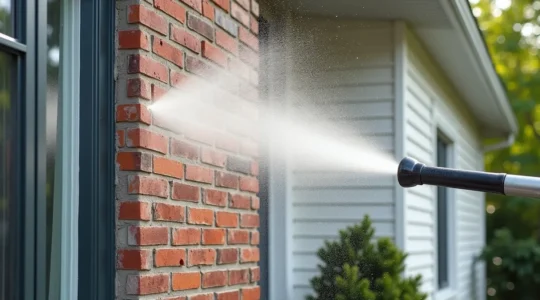
Soft-Washing vs Pressure Washing: Which Method Protects Your Stucco and Siding?
The belief that higher pressure equals a better clean is the single most costly mistake a Quebec homeowner can make for their siding. High-pressure washing injects water behind siding, leading to catastrophic mold growth and damage during our freeze-thaw cycles….
Read more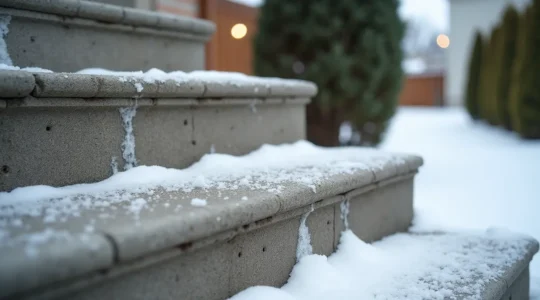
How to Remove Salt Stains from Concrete Steps Without Causing Spalling or Cracks?
The common methods for cleaning salt from concrete are often the very cause of its destruction; the real solution is not about scrubbing the surface but strategically detoxifying the concrete from within. Aggressive pressure washing and hot water can force…
Read more
Rental Mats vs Owned Mats: Which Solution Is Most Cost-Effective for Quebec Winters?
The most cost-effective matting solution for Quebec winters is not about the purchase price versus the rental fee; it’s about which system prevents the highest long-term costs from floor damage and increased labour. Standard rental mats often reach their saturation…
Read more
How to Prevent Winter Salt from Destroying Your Commercial Entryways in Quebec?
Salt damage isn’t an inevitable cost of doing business in Quebec; it’s a failure of your building’s defense system. Implement a 3-zone, 15-foot matting system to capture over 80% of salt and slush at the door. Use a dedicated chemical…
Read more