
In summary:
- Stop relying on simple visual checks, which are flawed by cognitive biases like “inattentional blindness.”
- Adopt a system of “pattern interrupts” by varying inspection routes and times to see what your team is missing.
- Use scientific tools like ATP swabs to validate disinfection and data from digital apps to identify recurring “hotspots.”
- Deliver feedback using a constructive model to correct issues without demotivating staff, which is crucial in a tight labour market.
- Focus your limited time on high-risk areas identified by data and seasonal trends specific to Quebec.
As a busy manager, you rely on a quick walkthrough to ensure the night’s cleaning meets standards. You scan for the obvious: full trash cans, dusty surfaces, and smudged glass. But what if the most significant hygiene risks are the ones you—and your cleaning staff—have been trained by routine to ignore? The common advice is to use a detailed checklist, but this often reinforces a “tick-the-box” mentality rather than fostering a culture of deep cleaning.
The reality is that after weeks of cleaning the same space, staff can develop “inattentional blindness,” a cognitive blind spot to recurring issues like dust buildup in corners or grime along baseboards. A 30-minute inspection, therefore, can’t just be a faster version of a long one. It must be smarter. It demands a strategic shift from a visual scavenger hunt to a targeted audit focused on risk, data, and scientific validation.
This guide moves beyond generic checklists. It provides a framework for conducting high-impact, time-efficient inspections by focusing on the psychology of cleaning, data-driven targeting, and constructive communication. We will explore how to scientifically validate cleanliness, identify true problem areas before they become complaints, and deliver feedback that corrects and motivates, all within your tight schedule and the specific context of operating in Quebec.
This article provides a complete roadmap for transforming your rapid inspections from a superficial check-up into a powerful quality assurance tool. Explore the sections below to master each component of this strategic approach.
Summary: A Strategic Guide to Rapid and Effective Sanitary Inspections
- Why Do Cleaners Stop Seeing Dust Bunnies in Corners Over Time?
- How to Use ATP Testing Swabs to Validate Disinfection Scientifically?
- Digital Inspection Apps vs Paper Checklists: Which Improves Accountability?
- The Criticism Mistake That Demotivates Cleaning Staff After Inspections
- How to Identify the Top 5 “Complaint Hotspots” in Your Building?
- How to Conduct Surprise Cleaning Audits Without Demotivating Your Service Provider?
- How to Conduct a Mock Inspection to Identify Gaps Before the Inspector Arrives?
- Implementing Strict Hygiene Protocols: How to Overcome Staff Resistance to New Rules?
Why Do Cleaners Stop Seeing Dust Bunnies in Corners Over Time?
The phenomenon of experienced cleaners missing obvious dirt is not about negligence; it’s about neuroscience. It’s called inattentional blindness, where the brain, seeking efficiency, filters out predictable information. After cleaning the same area repeatedly, a cleaner’s brain automates the process and literally stops “seeing” the unchanged environment, like the persistent dust in a low-traffic corner. This cognitive shortcut, meant to save mental energy, becomes a primary source of quality degradation in cleaning services.
This issue is compounded by challenges in the Canadian labour market. High staff turnover means a constant influx of less experienced workers who may not have developed a keen eye for detail in the first place. A Mercer LLC study revealed that the average voluntary turnover rate in Canada grew to 15.5% in 2023, up from 12.4% the previous year. This constant churn makes establishing consistent quality a significant challenge for managers.
To counteract inattentional blindness, you must intentionally break the routine—for both your cleaners and yourself. Implement a “Pattern Interrupt” inspection strategy. Instead of walking the same path every time, systematically vary your routes and inspection times. This forces a fresh perspective, making it easier to spot the very things routine has made invisible. Partnering with Quebec-based training organizations for modules on cognitive bias can also equip your team with the awareness needed to fight this natural tendency.
How to Use ATP Testing Swabs to Validate Disinfection Scientifically?
A surface can look clean but still be a hotbed for microbial activity. For a true sanitary inspection, especially in under 30 minutes, you need to move beyond what the eye can see. This is where ATP (adenosine triphosphate) testing becomes an invaluable tool. ATP is an energy molecule found in all living cells, including bacteria, yeast, and mould. An ATP swab measures the amount of this molecule on a surface, providing a numerical score in Relative Light Units (RLU) that quantifies the level of contamination.
The process is simple and fast. You swab a surface, insert the swab into a luminometer, and get a result in seconds. This provides immediate, objective, and scientific proof of whether a surface has been properly disinfected or just superficially wiped down. It replaces subjective arguments about “cleanliness” with hard data. This is crucial for high-touch surfaces like door handles, light switches, and cafeteria tables.
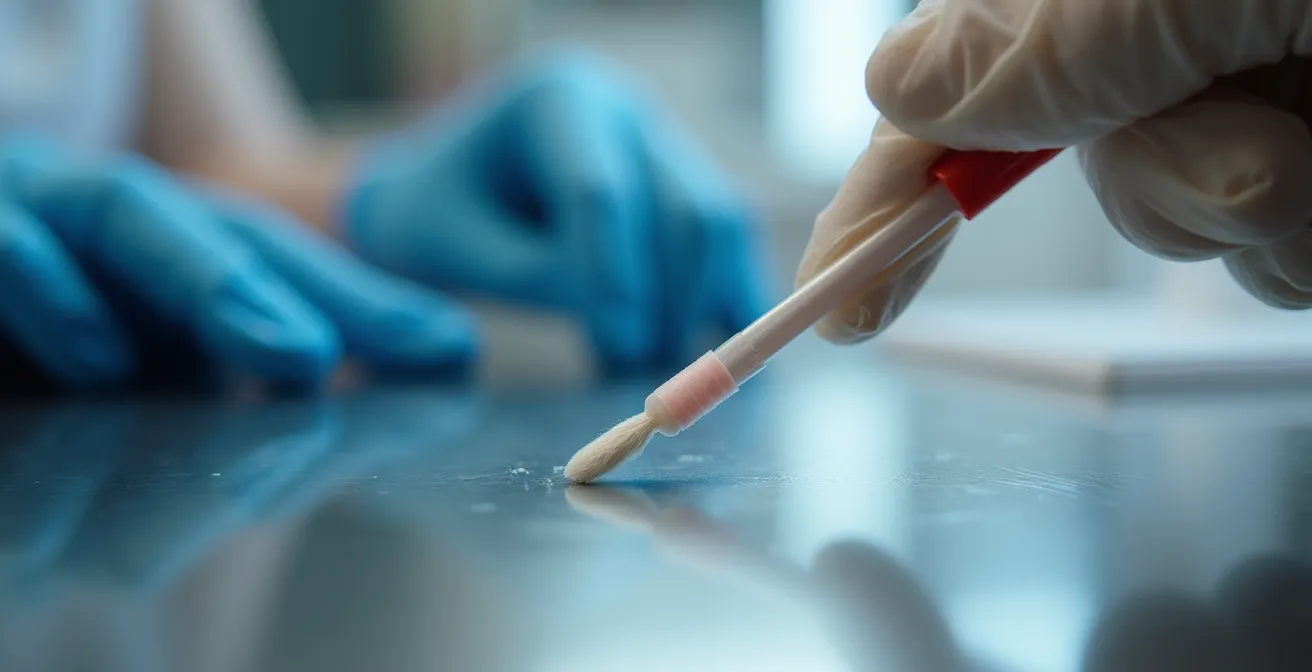
But what does a “good” score look like? The standards vary by environment. A score that is acceptable for an office desk would be a critical failure for a food preparation surface. Having clear benchmarks is essential for making your ATP data actionable and for setting clear expectations with your cleaning team. The following table outlines commonly accepted RLU benchmarks. According to an analysis of ATP testing standards, stricter levels are required for areas with higher hygiene risks.
| Environment Type | Maximum RLU | Application |
|---|---|---|
| Food Contact Surface | Below 100 RLU | Commercial cafeterias, kitchens |
| General Commercial | Below 150 RLU | Office spaces, meeting rooms |
| High-Risk Areas | Below 50 RLU | Healthcare adjacent spaces |
Digital Inspection Apps vs Paper Checklists: Which Improves Accountability?
Paper checklists have long been the standard for cleaning inspections, but they are fundamentally flawed. They are slow, prone to being lost or damaged, and offer zero real-time data for analysis. Most critically, they fail to build a useful picture of performance over time. A paper checklist from last Tuesday is a dead-end document; it can’t easily tell you if the same restroom stall has been missed for three weeks in a row. This is where digital inspection apps create a paradigm shift in accountability.
Digital platforms like Otuvy transform inspections from a subjective exercise into a data-driven quality control system. As one commercial cleaning manager using the system noted, the impact is transformative.
Our quality control has improved because we have the data to target areas of concern. We have real time information that gives us real time answers. This enables us to perform better, train better, and be more transparent to the customer.
– Commercial Cleaning Manager, Otuvy Customer Testimonial
With a digital app, a manager can complete an inspection on a tablet or phone, attach photos of deficiencies, and instantly generate a work order for the cleaning team to address the issue. The data from every inspection is logged, time-stamped, and aggregated. This allows you to identify trends, compare the performance of different shifts, and pinpoint recurring “hotspots” that require targeted training or a process change. This real-time information loop makes accountability clear and objective. It’s no longer about one person’s opinion versus another’s; it’s about what the data shows.
The Criticism Mistake That Demotivates Cleaning Staff After Inspections
You’ve used data to find a genuine cleaning deficiency. The next step—communicating it to your staff—is the most critical and the easiest to get wrong. The common mistake is to lead with criticism. A blunt, “You missed a spot,” can feel like a personal attack, undermining morale and motivation. In a strained labour market, this approach is not just ineffective; it’s expensive. According to recent reports, Canadian companies estimate an average cost of $30,674 annually to replace an employee, factoring in rehiring and lost productivity.
Demotivation leads directly to disengagement and turnover. The key is to reframe feedback not as criticism, but as part of a shared goal: maintaining a safe and healthy environment for building occupants. A highly effective method is the Inspire-Correct-Inspire (ICI) feedback model. This structure ensures your message is received constructively and reinforces the employee’s value.
This approach transforms a potentially negative interaction into a coaching opportunity. It respects the employee’s contribution while clearly outlining the standard that needs to be met. It builds trust and reinforces that quality control is a collaborative effort, not a punitive one. By always starting and ending with the “why” and a note of confidence, you protect motivation and invest in your team’s long-term performance.
Action Plan: The Inspire-Correct-Inspire (ICI) Feedback Model
- Inspire: Start by reinforcing the importance of their work for occupant health and safety. (“Your work is essential for keeping everyone here healthy.”)
- Correct: Provide specific, actionable, non-judgmental corrections with clear examples. (“I noticed the baseboards in the west corridor were missed. Let’s make sure they’re wiped down nightly.”)
- Inspire: Express confidence in their ability to meet the standard and recognize past successes. (“I know you can get this right; your work in the main lobby has been excellent.”)
- Document: Always acknowledge what was done right in your report before addressing deficiencies.
- Follow-up: Schedule positive check-ins to recognize improvements and build trust.
How to Identify the Top 5 “Complaint Hotspots” in Your Building?
In a 30-minute inspection, you can’t be everywhere. The key is to be in the right places. “Complaint hotspots” are the specific areas that consistently generate negative feedback or fail inspections. Identifying them requires moving from anecdotal evidence (“I think the restrooms are always the problem”) to a data-driven approach. Digital inspection software like CleanTelligent provides the analytics to uncover these patterns, tracking deficiencies to reveal if a problem is due to high traffic, an inefficient process, or a training gap.
However, you don’t need complex software to start thinking strategically. A major source of hotspots in Quebec is seasonality. The cleaning challenges in a Montreal office building are drastically different in February than in July. A proactive manager anticipates these shifts and adjusts their inspection focus accordingly. For example, the relentless slush and calcium from winter salt make entranceways the number one battleground from November to April.

By creating a seasonal calendar, you can direct your limited inspection time to the areas of highest risk. This proactive focus allows you to catch issues before they become occupant complaints. The following table provides a basic framework for seasonal hotspots in a typical Quebec commercial building.
| Season | Primary Hotspot | Specific Challenge | Inspection Frequency |
|---|---|---|---|
| Winter (Nov-Apr) | Entranceways/Lobbies | Salt and calcium buildup | Daily inspection required |
| Spring (May-Jun) | Windows/Exteriors | Pollen and construction dust | Weekly inspection |
| Summer (Jul-Aug) | HVAC areas | Humidity and mold risk | Bi-weekly inspection |
| Fall (Sep-Oct) | Carpeted areas | Leaf debris and moisture | Weekly inspection |
How to Conduct Surprise Cleaning Audits Without Demotivating Your Service Provider?
Surprise audits are a powerful tool for getting an honest snapshot of cleaning quality. However, they can easily be perceived as a “gotcha” tactic, fostering mistrust and resentment. In the current Canadian job market, this is a risky approach. As Bill Stoller, CEO of Express Employment International, points out, the workforce is already under pressure.
High turnover in the booming jobs market of the past few years has led to a strained workforce that is stressed and burned out. With data showing more employees are staying in place, now is the perfect time to create retention tactics to stabilize headcount and keep top talent.
– Bill Stoller, Express Employment International CEO
The solution is to reframe the purpose of the surprise audit. It should not be positioned as a tool to catch people failing, but as a collaborative quality check. The goal is to get a “real-world snapshot” to ensure that the agreed-upon standards are consistently met for the health and safety of everyone in the building. This positions the audit as a partnership, not a punishment.
Systems like Janitorial Manager showcase this collaborative approach. They allow positive inspection reports to be shared with both clients and employees, formally recognizing good work. When deficiencies are found, they are documented as opportunities for improvement within a system that also tracks successes. This balanced approach builds a stronger, more transparent relationship with your service provider. It proves that you are just as interested in highlighting excellent work as you are in correcting errors, turning the audit from a source of anxiety into a mechanism for continuous improvement.
How to Conduct a Mock Inspection to Identify Gaps Before the Inspector Arrives?
The most stressful inspections are the ones conducted by external bodies, whether it’s a client’s quality assurance team or a regulatory body like Quebec’s CNESST (Commission des normes, de l’équité, de la santé et de la sécurité du travail) or MAPAQ (Ministère de l’Agriculture, des Pêcheries et de l’Alimentation du Québec). The best way to reduce this stress and ensure success is to be thoroughly prepared. A mock inspection is your most effective tool for this.
A successful mock inspection is not just a casual walkthrough; it’s a full dress rehearsal. The first step is to use the real criteria. Download the actual inspection forms and guidelines from the relevant authority’s website. This ensures you are evaluating your facility against the exact standards that will be applied. For new constructions or renovations in Quebec, inspections should occur at multiple phases, including before walls are closed to check plumbing and electrical, not just upon completion.
To fight the “inattentional blindness” that even affects managers, one of the most powerful techniques is ‘Fresh Eyes’ Role-Playing. Instead of conducting the audit yourself, assign managers or supervisors from different departments to perform the inspection. A facilities manager will see things a marketing manager won’t, and vice-versa. This cross-departmental approach brings a diverse set of perspectives and is highly effective at uncovering gaps that the regular team has become accustomed to overlooking. Digital tools like GoAudits can further streamline this process, allowing different team members to use standardized checklists on mobile devices and aggregate a clear roadmap for improvement.
Key takeaways
- Inattentional blindness is the real enemy of consistent cleaning quality, affecting both cleaners and inspectors.
- A fast inspection must be a smart inspection; use data, science (ATP), and pattern-breaking routes to focus your limited time.
- Feedback is a tool for motivation, not demotivation. The ICI (Inspire-Correct-Inspire) model is essential for retaining staff in a competitive market.
Implementing Strict Hygiene Protocols: How to Overcome Staff Resistance to New Rules?
Introducing a new, stricter hygiene protocol or a data-driven inspection system is often met with resistance. Employees may see it as more work, a sign of mistrust, or a critique of their existing habits. In a climate where, according to a 2024 Robertson College survey, a majority of Canadian workers have considered leaving their job, mishandling this rollout can be a critical error. Forcing rules from the top down is the fastest way to create resentment and disengagement.
A far more effective strategy is to foster ownership and buy-in from the ground up. Instead of simply enforcing new rules, identify high-performing, respected members of your cleaning staff and empower them as “Hygiene Ambassadors.” This peer-to-peer approach is central to successful change management. These ambassadors can be involved in co-developing the rollout plan, testing new procedures or tools, and, most importantly, training their peers.
When training comes from a trusted colleague instead of a manager, it is received with less skepticism and more openness. As demonstrated in implementations with tools like the Aspire platform, this method leads to significantly stronger adoption of new protocols. The ambassadors can provide realistic feedback on what works and what doesn’t, helping to refine the protocols for practical, real-world application. This collaborative process turns a top-down mandate into a shared team initiative, transforming potential resistance into proactive engagement and ensuring your new, higher standards are maintained long-term.
By shifting your mindset from a simple checklist to a strategic audit system, you can conduct faster, more effective sanitary inspections. The key is to combine an understanding of human psychology with the power of data and a commitment to constructive, respectful communication. Start implementing these strategies today to elevate your building’s hygiene standards and build a more motivated, accountable cleaning team.