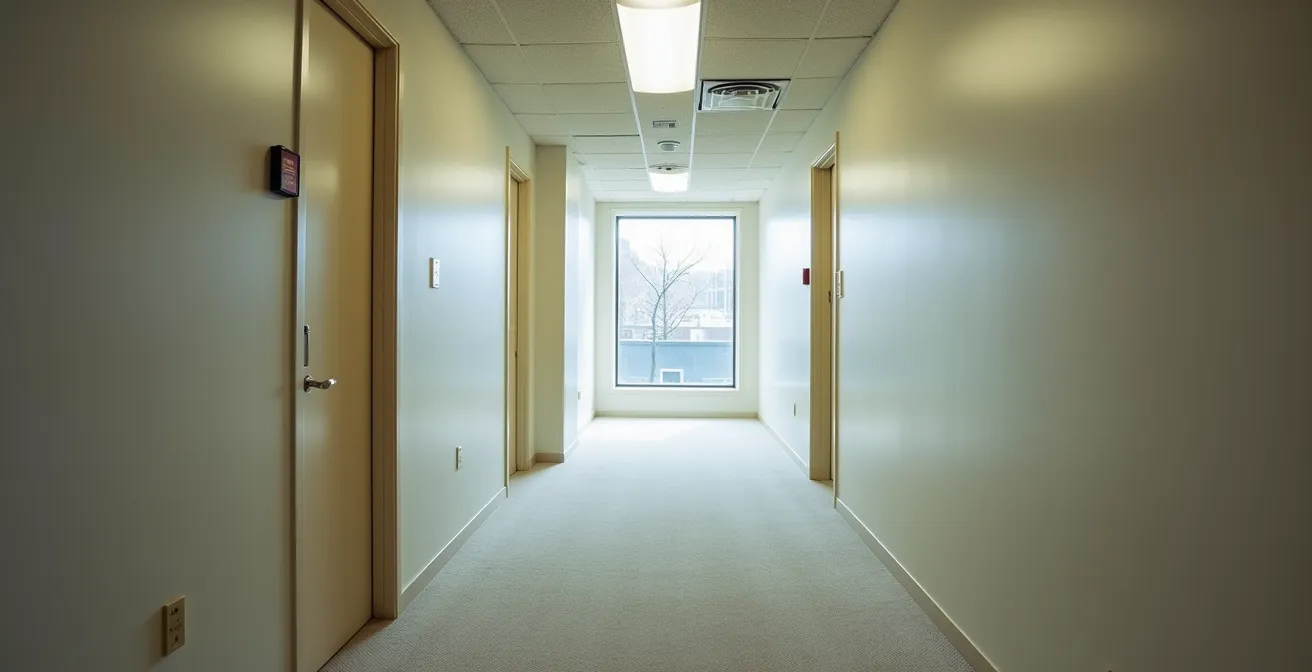
The constant arguments over hallway cleaning in your triplex aren’t a sign of bad tenants, but of a broken system.
- Effective management relies on proactive systems that minimize friction, not reactive rules that cause it.
- Clear, non-negotiable standards based on Quebec’s safety codes and a fair cost-benefit analysis for hiring help are key.
- Addressing seasonal pressures, especially from Montreal winters, is critical to preventing the most common disputes.
Recommendation: Shift your role from “cleaning police” to “system designer” to restore peace and reclaim your time.
If you’re an owner-occupant in a Montreal triplex, the feeling is all too familiar. You come home to find slushy boot prints tracking down the stairs, a stroller blocking the hallway again, or a dusting of winter salt that’s been there for a week. The frustration isn’t just about the mess; it’s the feeling that you’re the only one who cares, the de facto janitor for a property you own. You’re not just a landlord; you’re a neighbour, and the constant, low-level conflict over shared space cleanliness can drain your energy and goodwill.
The common advice is to create cleaning schedules or add clauses to leases. But as you’ve likely discovered, these often fail. A schedule on the fridge becomes invisible wallpaper, and lease clauses are difficult to enforce without escalating the situation into a formal dispute. This friction builds until the shared hallway feels more like a battleground than a common area. The core issue isn’t a lack of rules, but a lack of a system that is clear, fair, and accounts for human nature.
But what if the solution wasn’t about stricter enforcement, but about smarter design? The key to ending these disputes lies in creating a low-friction system. This approach moves beyond simply telling people what to do and instead focuses on designing a framework where the right behaviour is the easiest path to follow. It’s about pre-empting conflict by addressing the psychology of shared spaces, leveraging Quebec-specific regulations proactively, and making decisions based on data, not frustration.
This guide will walk you through building that system. We’ll explore why simple rules fail, how to create a cleaning roster that actually works, when it’s financially sensible to hire a professional, and how to use provincial codes to set non-negotiable standards. We will also tackle the unique seasonal challenges, from winter mat failures to summer cleaning priorities, to help you create a peaceful and genuinely clean shared environment.
Explore the following sections to build a comprehensive strategy for managing the common areas of your building. This detailed breakdown provides actionable steps for each of the most common points of friction between neighbours.
Summary: A System for Managing Shared Area Cleaning
- Why Do Tenants Leave Personal Items in Common Hallways despite Rules?
- How to Set Up a Fair Cleaning Roster That Tenants Will Actually Follow?
- Hiring a Cleaner vs Doing It Yourself: At What Point Is It Worth the Cost?
- The Doormat Mistake in Common Hallways That Violates Fire Codes
- How to Split Cleaning Supplies Costs Equitably Among Neighbors?
- Why Balcony Cleaning Habits Are the #1 Cause of Neighbor Disputes in High-Rises?
- Why Do Standard Mats Stop Working After Only 2 Hours of Heavy Snowfall?
- Windows or Carpets: What Should You Prioritize Cleaning in Early Summer?
Why Do Tenants Leave Personal Items in Common Hallways despite Rules?
The persistent presence of shoes, strollers, or bags in a common hallway isn’t usually an act of defiance; it’s a symptom of a psychological phenomenon called “diffusion of responsibility.” When a space belongs to everyone, it effectively belongs to no one. Tenants see the hallway not as an extension of their home, but as a neutral buffer zone. Leaving an item there for a “few minutes” seems harmless because the direct impact on a single person is minimal. This creates a classic “tragedy of the commons” scenario, where small, individually rational actions lead to a collectively negative outcome: a cluttered, unsafe, and messy space.
Without clear and consistently enforced boundaries, this neutral zone becomes a storage annex. A simple rule in a lease is often too abstract to combat the daily convenience of dropping something just outside the door. To reclaim this space, you must transform it from a “no-man’s-land” into a clearly regulated area. This involves creating psychological ownership among residents, where everyone understands their role in its upkeep. However, when passive acceptance fails, a formal process is necessary.
The Civil Code of Quebec provides a powerful tool for this. Section 1039 requires the syndicate (or, in a smaller building, the collective owners) to maintain and preserve the common areas. This isn’t just a suggestion; it’s a legal obligation. When items obstruct hallways, they aren’t just untidy—they can be a safety hazard and a violation of this duty. Referencing this legal foundation shifts the conversation from a personal complaint (“I don’t like your shoes here”) to a matter of collective compliance and safety (“The building’s rules, based on legal obligations, require the hallway to be clear”).
When informal reminders fail, a documented, formal approach is your next step. This removes the emotional component and establishes a clear, professional escalation path. It shows you are serious about enforcement not out of personal preference, but out of a duty to maintain the building for everyone’s benefit and safety.
Ultimately, a clear hallway is the first sign of a well-functioning system, setting the stage for cooperation on more complex cleaning tasks.
How to Set Up a Fair Cleaning Roster That Tenants Will Actually Follow?
A cleaning roster taped to the wall is the most common solution to shared area maintenance, and it’s also one of the most likely to fail. The reason is simple: most rosters are vague, unfair, and lack accountability. A line that just says “Week 2: John – Clean Hallway” is destined for failure. What does “clean” mean? Does it include mopping? Wiping the handrails? What if John’s “clean” is your “filthy”? To create a roster that works, you need to design it as part of a low-friction system, focusing on clarity, simplicity, and perceived fairness.
First, eliminate ambiguity. Instead of assigning a person to a “zone,” assign them a short, specific list of tasks. For example, a weekly rotation could include: 1. Sweep front entrance and all stairs. 2. Wet mop all tiled surfaces. 3. Wipe down front door glass and mailboxes. This task-based approach leaves no room for interpretation. The job is done when the tasks are checked off, not when someone’s subjective standard of “clean” is met.
Second, ensure fairness in workload. In a triplex, one unit might be on the ground floor with minimal stair traffic, while another is on the third floor. A rotating schedule where everyone does the exact same work might not feel fair. Consider a hybrid model. A basic weekly rotation could cover light tasks (sweeping), while heavier monthly tasks (washing walls, cleaning light fixtures) could be assigned differently or outsourced. The goal is a system that everyone agrees is equitable from the start.
Finally, make it visible and accountable. Use a shared digital calendar or a large, high-quality whiteboard in a visible but discreet location (like a laundry room). The satisfaction of physically checking off a completed task is a small but powerful motivator. This also creates positive social pressure; it’s immediately obvious who has and hasn’t completed their turn, without a single word needing to be spoken. A well-designed roster fosters a sense of shared responsibility rather than a cycle of nagging and resentment.
Your 5-Point Audit for a Functional Cleaning System
- Define Territories: Clearly map out all shared zones (e.g., entrance, main stairway, back exit, laundry area) and document specific, non-overlapping responsibilities for each.
- Inventory Tasks: List every single cleaning task required for each zone (e.g., sweep, mop with product X, wipe handrails, empty shared recycling bin) and define the expected frequency for each.
- Align on Standards: Collaboratively agree on the definition of “clean” with visual examples or simple metrics (e.g., “no visible salt stains on mat,” “dust-free baseboards”).
- Establish a Feedback Loop: Create a simple, non-confrontational channel to report issues or suggest improvements, such as a shared chat group or a small whiteboard in the laundry room.
- Schedule a Review: Plan a mandatory 3-month check-in meeting with all residents to adjust the roster, tasks, or schedule based on what is and isn’t working in practice.
When the system is this clear, compliance becomes the path of least resistance, which is the ultimate goal.
Hiring a Cleaner vs Doing It Yourself: At What Point Is It Worth the Cost?
For a weary owner-occupant, the thought of hiring a professional cleaner can feel like a dream. No more arguments, no more weekend mopping, just a consistently clean hallway. But in a small building like a triplex, the cost can seem prohibitive. The decision to hire out is not just a financial one; it’s a strategic calculation where you weigh the monetary expense against the cost of your time, energy, and peace of mind. This is the cost-benefit tipping point.
To find your tipping point, start with the real numbers. In Montreal, the cost for professional cleaning of common areas in a small building can vary. Some services charge by the hour, while others give a flat rate per visit. According to 2024 Montreal market data, a single cleaning session for a small property can range from $50 to $140 per cleaning session. For larger commercial spaces, prices are often calculated per square foot, where Montreal commercial cleaning services typically charge between $0.15 and $0.30. For a triplex, a weekly or bi-weekly visit might cost the building $200-$400 per month. Split three ways, this could be $65-$135 per unit monthly.
Now, quantify your own contribution. How many hours per month do you spend not just cleaning, but also worrying, sending reminder texts, and mediating disputes? If you spend four hours a month on this “cleaning administration,” and you value your free time at $25/hour, that’s $100 of your own time already spent. Suddenly, paying $100 for a professional service that eliminates both the work and the conflict seems like a bargain. This calculation also ignores the significant benefit of liability: a professional service is insured and covered by CNESST, while a DIY approach places all liability for slips and falls on the owners.
The following table breaks down the true costs and benefits, helping you make a data-driven decision rather than an emotional one.
| Option | Cost Range | Time Investment | Liability Coverage |
|---|---|---|---|
| Professional Service | $30-$50/hour | 0 hours owner time | CNESST covered |
| DIY Rotation | $0 labor + supplies | 2-4 hours/week per unit | Owner liability |
| Hybrid Model | $100-150/month shared | 1 hour/month coordination | Partial coverage |
The tipping point is reached when the price of peace becomes lower than the cost of conflict. For many small building owners, that point arrives much sooner than they think.
The Doormat Mistake in Common Hallways That Violates Fire Codes
One of the most common sources of hallway clutter is also one of the most dangerous: the personal doormat placed outside an apartment door. While it seems like a considerate way to keep dirt out of one’s home, in Quebec, it often represents a direct violation of the National Fire Code. This isn’t a minor housekeeping rule; it’s a critical safety standard that provides a non-negotiable basis for keeping your common areas clear. This is a prime example of using proactive compliance to your advantage.
The issue is twofold. First, anything left in a common hallway—especially something residents are used to stepping over—can become a tripping hazard in an emergency. In a smoke-filled corridor where visibility is low, a simple doormat can cause a fall, impeding evacuation. Second, and more critically, most consumer-grade doormats are combustible. They provide fuel for a fire, potentially helping it spread more rapidly down a corridor, which is meant to be a safe path of egress. This is why building regulations are so strict about keeping these pathways clear of any and all items.
As the Régie du bâtiment du Québec (RBQ) clarifies, the provincial safety code directly incorporates these national standards. This gives you, the owner, a powerful and impersonal justification for a strict “no personal items in hallways” rule.
The requirements related to fire protection which are set out in the Building chapter of the Safety Code are the same as the ones set out by the National Fire Code – Canada 2010
– Régie du bâtiment du Québec, Quebec Safety Code Requirements
Instead of arguing with a tenant about aesthetics or tidiness, you can frame the rule as a matter of mandatory compliance with provincial law. The conversation changes from “I’d prefer if you didn’t…” to “Building safety regulations, which we are legally required to follow, prohibit any items in the hallways.” This removes you from the role of enforcer and positions you as a responsible administrator ensuring everyone’s safety. To manage winter slush and dirt effectively, invest in compliant, building-wide solutions like high-capacity recessed matting at the main entrance, rather than allowing a patchwork of individual, non-compliant mats.
This approach transforms a potential point of conflict into an opportunity to educate residents and improve the building’s overall safety profile.
How to Split Cleaning Supplies Costs Equitably Among Neighbors?
The argument over who buys the mop, the floor cleaner, or the replacement vacuum bags is a classic source of friction in a small building. One person feels they are always the one stocking up, while another buys the cheapest possible product that barely works. This seemingly minor issue can erode goodwill and undermine any cleaning roster. The solution, once again, is to create a low-friction system by centralizing and standardizing. This means creating a communal cleaning supply fund and a designated, organized storage space.
First, establish a simple, transparent fund. Calculate the approximate quarterly cost for all necessary supplies (all-purpose cleaner, mop heads, salt remover for winter, etc.). Divide this cost by the number of units and collect it as a small, regular “supplies fee”—perhaps $10-15 per month per unit. This transforms the cost from a sporadic, unfair burden into a predictable, shared utility. One person can be designated as the purchaser, using the communal fund so no one is out of pocket. This emulates the standardized practices of professional cleaning providers, who build supply management into their service contracts.
The Quebec Building Service Contractors Association (QBSCA), which represents a significant portion of the industry, champions such standards. Their members, which comprise close to 60% of the manpower in the Montreal building services industry, rely on standardized supply chains to deliver consistent quality. By adopting a similar mindset—a central fund for approved, effective products—you elevate the quality and consistency of your building’s cleaning, regardless of who is doing the work.
Second, create a dedicated and organized storage space. A small, locked closet in the basement or laundry area is ideal. When supplies are organized and easy to find, people are more likely to use them correctly and put them back. A chaotic pile of random bottles in a corner invites neglect.

An organized space signals that cleaning is a respected and important building function. It eliminates the excuse of “I couldn’t find the mop” and ensures everyone uses the same effective, pre-approved products. This simple system removes a dozen potential micro-aggressions from the daily lives of residents and reinforces the idea that the common areas are a shared, collective responsibility.
This logistical step is a cornerstone of a peaceful and clean shared living environment.
Why Balcony Cleaning Habits Are the #1 Cause of Neighbor Disputes in High-Rises?
While often seen as private extensions of a person’s unit, balconies in Quebec co-ownerships are typically “common portions for restricted use.” This legal distinction is the source of countless neighbour disputes. The issue is simple: what one person does on their balcony directly affects the person below. Improperly watering plants can lead to muddy water dripping onto a neighbour’s patio furniture. Shaking out a dusty rug can ruin a freshly cleaned surface below. And in winter, failing to clear accumulated snow can have serious consequences.
The most contentious issue is water and snow drainage. A resident who hoses down their balcony floor without care can flood the unit below. More seriously, allowing large amounts of snow and ice to build up can cause structural damage or, during a thaw, lead to significant water infiltration for neighbours. These are not minor annoyances; they can result in costly repairs and legal action. Quebec courts have been clear that this negligence has financial consequences.
The civil liability of a co-owner was upheld by the Court of Quebec – Small Claims Division in January 2019, for having allowed a large amount of snow to accumulate on her balcony
– CondoLegal.com, Quebec Court Decision on Balcony Maintenance
This legal precedent underscores that while a resident has exclusive *use* of their balcony, they do not have the right to neglect it at others’ expense. The responsibility for maintenance can, and should, be clearly defined in the building’s declaration of co-ownership. The declaration can delegate the maintenance charge to the co-owner who benefits from the balcony, making them explicitly responsible for its upkeep and liable for any damage caused by their neglect.
For a landlord in a triplex or small condo, this means being proactive. Your building rules should include specific guidelines for balcony use: no shaking of rugs over the edge, use of drip trays for all plants, and a clear policy on snow removal. By educating all residents on these rules and the legal principle of “restricted use,” you can prevent disputes before they start. The balcony is not an island; it’s part of an interconnected system where one person’s habits directly impact their neighbour’s quality of life.
Clear rules and shared understanding are the only way to ensure these outdoor spaces remain a source of enjoyment, not conflict.
Why Do Standard Mats Stop Working After Only 2 Hours of Heavy Snowfall?
During a heavy Montreal snowstorm, the entrance of a building becomes a war zone against slush, water, and abrasive calcium chloride. Many building owners believe any large mat will do the job, only to find their hallways covered in a gritty, white-filmed puddle within hours. The problem is that standard residential-grade mats are not designed for the intense, sustained traffic of a Quebec winter. They quickly become saturated and, once their capacity is exceeded, they stop trapping dirt and start spreading it.
The failure happens in two stages. First, the mat’s pile becomes completely saturated with melted snow. With nowhere else for the water to go, every subsequent footstep squeezes the dirty water back out, tracking it further into the building. Second, the sheer volume of rock salt and calcium chloride overwhelms the mat’s fibres. This abrasive residue not only looks terrible but can permanently damage flooring like hardwood and tile grout. A standard mat becomes a source of the problem, not the solution, after just a couple of hours of heavy use. This is a classic seasonal pressure point that requires a systems-based solution, not a bigger, cheap mat.
The professional solution is to implement a commercial-grade, multi-stage matting system. This typically involves a coarse “scraper” mat outside the main door to remove large debris and snow, followed by a high-capacity “water-hog” mat inside. These interior mats are designed with a bi-level construction: the top surface wipes moisture and dirt, which then falls to the lower level, keeping the walking surface itself relatively dry and effective for longer. Furthermore, a mat rotation schedule during heavy snowfall is critical. A saturated mat needs to be swapped out for a dry one to maintain effectiveness.

Investing in the right equipment is a core tenet of a low-friction system. Providing a matting system that actually works prevents the mess from ever getting deep into the building, dramatically reducing the cleaning workload and preventing the most common winter-related complaints. It’s a proactive investment that pays dividends in clean floors and fewer arguments.
Checklist for an Effective Winter Entry System
- Install a Scraper Mat: Place a heavy-duty, outdoor-rated scraper mat immediately outside the main entrance to remove the bulk of snow and grit from boots before entry.
- Deploy a High-Capacity Wiper Mat: Inside, use a large, commercial-grade “water-hog” mat with a rubber backing and bi-level construction that traps water and debris below the walking surface.
- Create a Boot Zone: If space allows, designate a small, clearly marked area just inside the door with a waterproof tray or bench for boot removal, keeping wet footwear off the main path.
- Establish a Mat Rotation Schedule: For heavy snowfall days, have at least one backup wiper mat ready. Plan to swap the saturated mat for a dry one every 3-4 hours to maintain absorption capacity.
- Post-Storm Cleaning Protocol: Schedule a specific time (e.g., within 12 hours of snowfall ending) to thoroughly clean all mats and mop the entire entrance area to remove corrosive salt residue.
This targeted approach is far more effective than simply reacting to the mess after it’s already spread through the building.
Key Takeaways
- System over Rules: A well-designed, low-friction system is more effective than a list of rules that require constant enforcement.
- Proactive Compliance: Use Quebec’s building and fire codes as non-negotiable foundations for safety and cleanliness rules.
- Calculate the Tipping Point: Make the decision to hire a cleaner based on a rational analysis of your time and energy costs versus the financial expense.
Windows or Carpets: What Should You Prioritize Cleaning in Early Summer?
As the last of the snow melts and Montreal transitions into spring and early summer, a new set of cleaning challenges emerges. The grime of winter gives way to a film of pollen, dust, and street dirt. For small buildings with common area carpets and windows, a critical question arises: what should be cleaned first to maximize impact on health and appearance? The expert consensus points to a clear priority: deep clean the carpets first, then do the windows.
The reasoning is rooted in air quality. Over the winter, carpets in common areas act like a sponge, absorbing an astonishing amount of tracked-in salt, calcium, sand, and other chemical de-icers. As the weather warms and humidity rises, these trapped particles can become airborne, contributing to poor indoor air quality and aggravating allergies and respiratory issues. A professional deep cleaning using hot water extraction is the only way to truly remove these embedded contaminants. According to cleaning professionals, scheduling a deep clean like this twice a year is a great way to maintain optimal condition, especially after a harsh Quebec winter. Tackling this task in early spring (April/May) immediately removes the winter’s toxic legacy.
Windows, while visually important, are a secondary priority. Cleaning them before the carpets have been deep-cleaned is inefficient. The dust and particles stirred up during the carpet cleaning process will inevitably find their way onto the freshly washed glass. By waiting until after the carpets are done, you ensure the windows stay clean for longer. While pollen on windows can be an annoyance, the health impact of embedded salt and allergens in carpets is far more significant.
This seasonal priority plan provides a clear, logical order of operations for your building’s annual deep clean, ensuring the best results for both aesthetics and resident well-being.
| Task | Spring Priority | Cost Impact | Health Impact |
|---|---|---|---|
| Carpet Deep Clean | Critical – Remove winter salt/calcium | $200-400 annually | Prevents respiratory issues |
| Window Cleaning | Important – Clear pollen film | $85-150 per service | Improves air quality indirectly |
| Timing Recommendation | Carpets first (April), Windows after (May) | Budget $500-600 total | Maximum health benefit |
This strategic sequencing is a hallmark of an effective, proactive building maintenance plan that addresses problems before they negatively impact residents.
Frequent questions on How to Manage Cleaning Disputes in Shared Common Areas of Triplexes and Small Condos?
Who is responsible for balcony cleaning in Quebec condos?
The maintenance of common portions for restricted use, for example balconies, can be entrusted to the co-owners who have the enjoyment. This reduces the use of external service providers, thereby reducing common expenses.
What are the legal consequences of neglecting balcony maintenance?
The costs that would result from a lack of maintenance would be borne by the offending co-owner.
Can syndicates enforce specific balcony cleaning rules?
The declaration of co-ownership may delegate this charge, in whole or in part, to each of the co-owners who benefit from an exclusive right of enjoyment.