Hygiene & Disinfection
Every surface tells a story about the invisible world around us. In workplaces, public facilities, and commercial spaces across Canada, the difference between a superficially clean environment and a genuinely hygienic one can directly impact employee health, customer confidence, and operational continuity. Hygiene and disinfection represent more than just routine cleaning—they form the foundation of preventive health measures that reduce absenteeism, contain pathogen transmission, and maintain regulatory compliance.
Understanding the principles behind effective sanitation requires moving beyond surface-level thinking. From the science of microbial elimination to the practical challenges of maintaining restroom facilities during harsh Canadian winters, this comprehensive resource explores the core concepts that separate effective hygiene programs from well-intentioned but insufficient efforts. Whether you’re managing a corporate office, a healthcare facility, or a high-traffic public space, the strategies outlined here will help you build a sustainable approach to cleanliness that protects both people and reputations.
Why Workplace Hygiene Matters More Than Ever
Recent public health events have fundamentally shifted expectations around workplace cleanliness. What was once considered adequate now falls short of employee and visitor expectations. Research from Canadian occupational health organizations indicates that visual cleanliness cues directly influence worker psychological well-being, while actual sanitation protocols determine physical health outcomes.
The gap between perception and reality creates a unique challenge. A workspace might appear spotless yet harbor pathogens in overlooked areas like keyboard surfaces, door handles, and shared equipment. Conversely, recently disinfected spaces might show minor cosmetic imperfections that trigger unwarranted anxiety. Addressing both dimensions requires strategic communication alongside rigorous cleaning protocols.
The Hidden Costs of Viral Transmission in Offices
Consider a typical Canadian office during flu season. A single infected employee touches an average of 30 surfaces per hour—elevator buttons, coffee machine controls, conference room tables, and shared printers. Without proper hygiene protocols, these contact points become distribution networks for pathogens. The resulting absenteeism doesn’t just affect the initially infected individual; it creates cascading disruptions as colleagues fall ill in waves.
Organizations that implement structured sanitation zones see measurably different outcomes. By designating high-touch areas for frequent disinfection and establishing clear traffic flow patterns that minimize cross-contamination, facilities can interrupt transmission chains before they establish momentum.
Building Sanitation Protocols That People Actually Follow
The most sophisticated disinfection system fails if employees don’t understand or embrace it. Successful hygiene programs balance three elements:
- Visual checklists that make cleaning schedules transparent and verifiable
- Accessible personal hygiene supplies positioned at natural workflow points
- Clear communication that explains the “why” behind protocols, not just the “what”
- Continuous training refreshers that prevent the gradual relaxation of standards
The choice between incentive-based compliance and sanction-based enforcement significantly affects long-term adoption. Research from workplace psychology suggests that positive reinforcement creates more sustainable behavioral change than punitive approaches, particularly when dealing with hygiene practices that require consistent voluntary participation.
Understanding the Science of Effective Disinfection
Disinfection and cleaning are not synonyms, though they’re often mistakenly used interchangeably. Cleaning removes visible dirt and organic matter through physical action and detergents. Disinfection, by contrast, uses chemical or physical agents to eliminate or deactivate pathogens on surfaces. The critical insight: disinfection cannot work effectively on dirty surfaces. Organic material shields microorganisms from disinfectant contact, rendering even powerful antimicrobial agents ineffective.
The Pre-Cleaning Imperative
This is where many sanitation efforts fail. Applying disinfectant spray to a visibly soiled surface wastes both product and time. Effective protocols always follow a two-step sequence: thorough cleaning to remove biofilm and debris, followed by proper disinfectant application with adequate contact time. Think of it like painting a wall—no primer works well over dirt and grease.
Contact time represents another commonly overlooked factor. Most commercial disinfectants require 3-10 minutes of wet surface contact to achieve their claimed microbial kill rates. Spraying and immediately wiping defeats the purpose, leaving surfaces damp but inadequately disinfected.
Antimicrobial Spectrum: Choosing the Right Tool
Different disinfectants target different categories of microorganisms. Understanding these spectrums prevents both over-treatment and under-protection:
- Broad-spectrum disinfectants eliminate bacteria, viruses, and fungi but may require longer contact times
- Virucidal agents specifically target viruses, which are particularly relevant during respiratory illness seasons
- Sporicidal products address the most resistant microbial forms but often involve harsher chemicals
- Bacteriostatic solutions prevent bacterial growth without necessarily killing existing microorganisms
The dilution ratio directly affects efficacy. A disinfectant mixed at half the recommended concentration doesn’t provide half the protection—it may provide virtually none. Conversely, excessive concentration wastes resources, increases chemical exposure risks, and can damage surfaces without improving microbial kill rates. Following manufacturer specifications isn’t optional; it’s the foundation of effectiveness.
Product Rotation and Resistance Prevention
Microorganisms can develop tolerance to repeatedly used disinfectants, similar to antibiotic resistance in medical contexts. Rotating between different chemical classes prevents this adaptation. A facility might alternate between quaternary ammonium compounds, hydrogen peroxide-based solutions, and hypochlorite products on a scheduled basis, maintaining effectiveness while preventing microbial adaptation.
Tackling Common Challenges in Restrooms and Washrooms
Restroom facilities present the most complex intersection of hygiene challenges: high moisture, constant use, diverse contamination sources, and user expectations for both cleanliness and functionality. Canadian facilities face additional seasonal complications when winter weather introduces salt, slush, and increased indoor humidity.
The Persistent Problem of Mineral Buildup
Hard water regions across Canada—particularly in Prairie provinces—struggle with calcium and magnesium deposits that accumulate rapidly on fixtures, shower glass, and tile surfaces. These mineral deposits aren’t merely cosmetic issues. The rough, porous surface of limescale provides ideal colonization sites for bacteria and biofilm, making subsequent disinfection less effective.
The gel-versus-spray debate for descaling products hinges on contact time and vertical surface adherence. Gels cling to shower walls and faucet necks, maintaining contact with mineral deposits long enough for chemical dissolution. Sprays cover large areas quickly but may run off before achieving full effectiveness on vertical surfaces. Strategic selection based on specific surface types and contamination patterns yields better results than universal application of a single product format.
Addressing Odor Sources Beyond Surface Cleaning
Persistent restroom odors often originate from locations that routine cleaning misses entirely. Floor drain traps that evaporate during periods of low use allow sewer gases to enter the space. Grout lines harbor organic material that slowly decomposes. Ventilation systems recirculate rather than exhaust contaminated air. Identifying these hidden sources requires systematic investigation rather than simply applying more air freshener.
Touch-free cleaning methodologies—using automated dispensers, sensor-activated fixtures, and no-contact application tools—reduce both cross-contamination and labor requirements. However, these systems require their own maintenance protocols. A soap dispenser that runs empty defeats its hygiene purpose just as thoroughly as one that requires hand-pump operation.
Optimizing Cleaning Frequency in High-Traffic Facilities
Public washrooms in transportation hubs, shopping centers, and institutional buildings face usage volumes that overwhelm standard daily cleaning schedules. The mathematical reality: a restroom serving 500 people daily requires fundamentally different protocols than one serving 50. High-traffic facilities benefit from:
- Scheduled interval checks (every 2-4 hours) rather than single daily servicing
- Quick-refresh protocols focused on critical touchpoints and consumable replenishment
- Deep cleaning during off-peak hours when thorough disinfection procedures won’t be immediately compromised
- Adequate ventilation systems sized for actual usage volume, not just room dimensions
The hand-drying method debate—paper towels versus air dryers—involves trade-offs between hygiene, environmental impact, and operational costs. Research shows paper towels remove more bacteria during the drying process itself, while air dryers eliminate waste and reduce supply chain dependencies. The optimal choice depends on facility priorities and user demographics.
Managing Biological Risks and Seasonal Threats
Pathogen prevalence follows predictable seasonal patterns in Canada. Respiratory viruses peak during cold months when indoor crowding increases and humidity levels drop. Gastrointestinal pathogens surge during summer when food service activities expand and temperature control becomes challenging. Effective hygiene programs anticipate these cycles rather than reacting to outbreaks after they begin.
Viral persistence on surfaces varies dramatically by pathogen type and environmental conditions. Some viruses remain infectious on stainless steel and plastic for days; others degrade within hours. Temperature and humidity significantly affect these timelines. Understanding these variables allows for targeted intensification of cleaning protocols during high-risk periods without maintaining unsustainable year-round intensity.
UV Technology and Supplemental Disinfection
Ultraviolet germicidal irradiation has evolved from specialized medical applications to broader commercial deployment. UV-C wavelengths damage microbial DNA, preventing replication without chemical residues. However, this technology comes with critical limitations: UV only disinfects surfaces with direct line-of-sight exposure, requires specific exposure durations, and poses eye and skin safety concerns during operation.
Portable UV devices marketed for general disinfection vary widely in effectiveness. Units must deliver sufficient UV-C intensity at the target distance for adequate duration—specifications that cheaper consumer models often fail to meet. UV works best as a supplemental verification step after conventional cleaning, not as a replacement for fundamental hygiene practices.
Emergency Preparedness and Stock Management
Recent supply chain disruptions demonstrated the vulnerability of just-in-time inventory systems for critical hygiene supplies. Facilities that maintained minimal buffer stocks found themselves unable to maintain sanitation protocols when demand surged and distribution networks struggled. Strategic stockpiling balances carrying costs against operational resilience:
- Maintain 30-60 day reserves of essential disinfectants and consumables
- Rotate stock to prevent expiration while ensuring availability
- Diversify suppliers to reduce single-point dependencies
- Pre-negotiate emergency procurement agreements before crisis conditions emerge
The false security trap occurs when visible cleaning activities create unwarranted confidence in protection levels. Theater-style sanitation—frequent visible wiping without proper products or techniques—provides psychological comfort without meaningful pathogen reduction. Genuine safety requires verified protocols, not performative gestures.
Implementing Standards and Certification in Your Facility
Post-incident decontamination requires documentation that extends beyond “we cleaned everything thoroughly.” Whether addressing confirmed pathogen exposure, environmental contamination, or post-construction debris, verifiable protocols establish both legal compliance and client confidence. Traceability systems record what was cleaned, when, by whom, with which products, and with what verification testing.
Canadian facilities may reference guidelines from Health Canada, provincial health authorities, and industry-specific regulators. While specific requirements vary by sector—healthcare faces stricter standards than general offices—the underlying principle remains consistent: documented procedures with objective verification outperform subjective assessments.
Steam Versus Chemical Decontamination
Thermal disinfection using pressurized steam offers chemical-free pathogen elimination, particularly valuable in food service environments and spaces serving chemically sensitive populations. Steam systems achieve temperatures that denature proteins and destroy cell structures without residue concerns. However, the method requires specialized equipment, longer application times, and careful technique to ensure adequate heat penetration.
Chemical decontamination provides faster coverage and easier application but introduces questions of residue, material compatibility, and proper disposal. The optimal approach often combines both: steam for porous materials and textiles that absorb chemical disinfectants, chemicals for hard surfaces requiring rapid turnover.
The Overlooked Role of Textiles
Upholstered furniture, curtains, carpets, and fabric partitions accumulate pathogens yet frequently escape rigorous disinfection protocols. Standard surface wiping doesn’t penetrate fabric fibers. These materials require specialized approaches: steam cleaning, antimicrobial sprays formulated for textiles, or professional laundering cycles with verified temperature and chemical parameters. Neglecting soft surfaces while meticulously disinfecting hard ones leaves significant contamination reservoirs untreated.
Leveraging Technology for Advanced Disinfection
Electrostatic sprayers, thermal foggers, and automated UV robots represent the technological frontier of sanitation. These systems promise comprehensive coverage that manual application struggles to achieve, reaching shadowed surfaces, irregular geometries, and ceiling-height areas without ladder work. However, technology amplifies both correct and incorrect techniques.
Electrostatic application charges disinfectant droplets, causing them to wrap around surfaces and cling to targets. When used with appropriate products and proper timing, this achieves superior coverage efficiency. When used with incompatible chemicals or without pre-cleaning, it efficiently distributes ineffective treatment across wide areas. The technology is a multiplier, not a substitute for fundamental understanding.
Thermal Fogging Applications and Safety Considerations
Thermal fogging generates ultra-fine droplets that remain suspended in air before settling on all surfaces within an enclosed space. This provides genuinely comprehensive coverage, reaching locations that spray bottles and wiping cannot access. The process requires facility evacuation, adequate ventilation time before re-entry, and compatible chemical products formulated for aerosolization. Incompatible products can damage HVAC systems, leave sticky residues, or create respiratory irritants.
The consumption optimization question becomes critical with advanced application systems. While these technologies can reduce labor time, they often increase product usage. Cost-benefit analysis should account for labor savings, improved coverage quality, and reduced re-cleaning frequency against higher chemical consumption and equipment investment.
Building an effective hygiene and disinfection program requires more than good intentions and conventional cleaning products. It demands understanding the science behind pathogen elimination, recognizing the gap between surface appearance and actual sanitation, and implementing verifiable systems that maintain standards during both routine operations and crisis conditions. The facilities that excel in this domain treat hygiene as an integrated system rather than a series of isolated cleaning tasks, creating environments where health, confidence, and productivity naturally flourish.
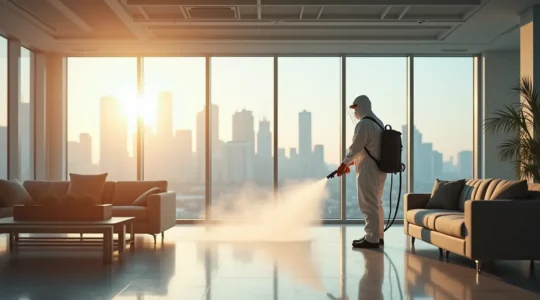
Is Electrostatic Spraying Worth the Investment for Your Quebec Business Facility?
For a Quebec-based facility, electrostatic disinfection technology transitions from a simple cleaning expense to a strategic capital investment when its ROI is viewed through the lens of an ‘Operational Efficiency Triangle’: reduced chemical spend, optimized labour costs, and mitigated asset…
Read more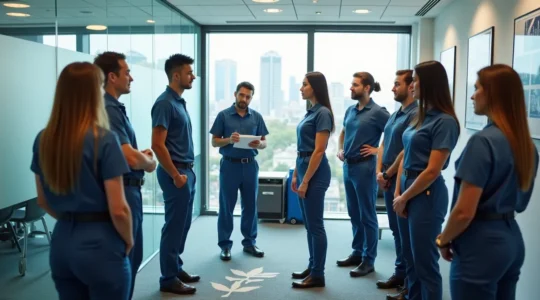
Implementing Strict Hygiene Protocols: How to Overcome Staff Resistance to New Rules?
The key to overcoming staff resistance to hygiene protocols is not stricter enforcement, but smarter system design. Protocol fatigue is a predictable psychological phenomenon, not a sign of employee negligence. Visual systems, simplified routines, and micro-learning are more effective than…
Read more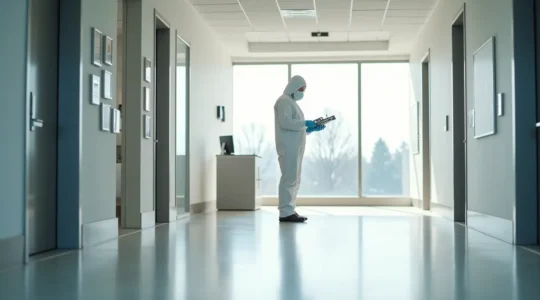
Validating Decontamination: How to Prove Your Quebec Facility Is Safe to Reopen?
After a contamination event, simply cleaning your Quebec facility isn’t enough; you must scientifically *prove* it’s safe to protect yourself from liability and win back customers. Visual cleanliness is deceptive due to hidden biofilms and contaminants absorbed by soft surfaces….
Read more
Pandemic Preparedness: Building a Cleaning Plan That Reacts to Viral Risks in Quebec
A robust pandemic cleaning plan is not about frequency, but about an evidence-based system of targeted intervention and verifiable decontamination. Identify and monitor viral “hot zones” using data (ATP testing) instead of assuming where risks lie. Develop a strategic stockpile…
Read more
Breaking the Infection Chain: Identifying High-Risk Vectors in Your Building’s Lobby
The most significant infection risks in your lobby aren’t the obvious ones; they are “hidden multipliers” like elevator buttons and shared pens that silently bypass standard cleaning protocols. High-touch points like elevator buttons can harbour up to 40 times more…
Read more
Sanitizing vs Disinfecting: Why Knowing the Difference Saves You Money and Sickness?
Effective disinfection is a procedural science where application errors, not product choice, pose the biggest financial and health risks. Common mistakes like improper concentration and ignoring contact time render even the best disinfectants useless, wasting product and money. Verifying product…
Read more
The Psychology of Hygiene: How Visible Cleanliness Shapes Employee Morale and Retention
Contrary to popular belief, your office hygiene strategy is not about cleaning—it’s about communication. The visibility and authenticity of your hygiene protocols send a powerful message about how much you value your employees’ well-being. An environment that only *smells* clean…
Read more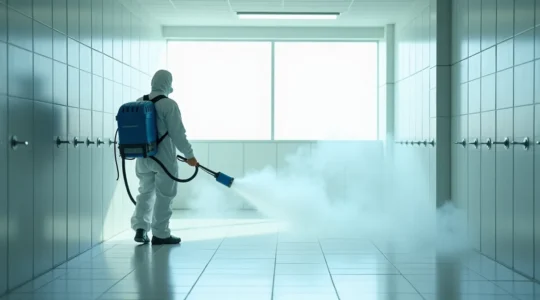
How to Eliminate Persistent Odors in Public Restrooms Instead of Just Masking Them?
The lingering malodors in your restrooms are not a simple cleaning issue; they are a systems failure that damages your business’s reputation. Persistent smells are caused by uric acid crystals and bacterial biofilms deeply embedded in porous surfaces like grout,…
Read more
Why Your Cleaners Fail on Hard Water Stains & What Actually Works
The reason you can’t defeat hard water stains is that you’re fighting the wrong battle: you’re using anti-limescale products on a shield of soap scum. Standard cleaners fail because tough mineral deposits (limescale) are protected by a greasy layer of…
Read more
How Does Certified Hygiene Impact Employee Absenteeism Rates in Open Plan Offices?
Implementing a structured, certified hygiene system is a direct operational strategy to reduce absenteeism, not just a cleaning expense. Poor hygiene is a quantifiable productivity drain, especially in Quebec where workplace absence rates are significantly high. Systematic protocols like color-coded…
Read more