A robust pandemic cleaning plan is not about frequency, but about an evidence-based system of targeted intervention and verifiable decontamination.
- Identify and monitor viral “hot zones” using data (ATP testing) instead of assuming where risks lie.
- Develop a strategic stockpile plan that balances immediate readiness with long-term cost and waste management.
Recommendation: Implement a validation protocol using quantifiable metrics to prove facility safety and ensure CNESST compliance in Quebec.
The last global health crisis taught business continuity planners a harsh lesson: a reactive approach to viral threats is a failing strategy. When a new pathogen emerges, the default response is often a frantic, visible display of “deep cleaning.” Staff are told to increase cleaning frequency, spray every imaginable surface, and exhaust supplies of disinfectants. But this flurry of activity rarely translates into a truly resilient or defensible position. It creates a false sense of security while often wasting resources and exposing staff to unnecessary chemical hazards.
The core difference between cleaning, which removes dirt and germs, and disinfecting, which kills pathogens, often gets lost in the panic. A truly effective pandemic plan moves beyond the platitude of “clean high-touch surfaces more often.” It requires a strategic framework. For a Quebec-based organization, this isn’t just about hygiene; it’s about operational resilience, cost control, and meeting the stringent expectations of bodies like the CNESST (Commission des normes, de l’équité, de la santé et de la sécurité du travail).
But what if the key wasn’t simply *more* cleaning, but *smarter* cleaning? The paradigm must shift from brute-force disinfection to an evidence-based system of risk assessment, targeted intervention, and objective validation. This article outlines how to build such a plan—one that is not only effective against new viral risks but is also efficient, sustainable, and, most importantly, defensible. We will explore how to identify true hot zones, evaluate advanced disinfection technologies, manage resources strategically, and prove, with data, that your facility is safe for re-occupancy.
This guide provides a structured approach for creating a robust cleaning protocol. The following sections break down the critical components, from understanding viral behaviour on surfaces to validating your decontamination efforts in line with Quebec’s regulatory landscape.
Summary: A Strategic Framework for Viral Risk Cleaning
- Why Does Norovirus Survive on Carpets for Weeks During Winter?
- How to Identify “Hot Zones” for Virus Transmission in Open-Space Offices?
- UV-C Robots vs Manual Spraying: Which Is More Cost-Effective for Large Areas?
- The Fogging Mistake: Why Spraying the Air Doesn’t Clean the Surfaces
- How to Maintain a Strategic Stockpile of Disinfectants Without Expiration Waste?
- How to Disinfect Your Home Effectively After a Viral Infection Outbreak?
- Why Do Viruses Spread 3x Faster in Offices with Poor Spatial Hygiene Protocols?
- Validating Decontamination: How to Prove Your Quebec Facility Is Safe to Reopen?
Why Does Norovirus Survive on Carpets for Weeks During Winter?
Understanding pathogen survivability is the first step in building a risk-based cleaning plan. Viruses are not all created equal. Enveloped viruses like influenza are relatively fragile, but non-enveloped viruses like Norovirus are notoriously resilient. During winter, lower humidity and indoor heating create an ideal environment for these pathogens to persist. Norovirus, in particular, can survive on soft surfaces like carpets and upholstery for up to six weeks.
This long survival window is due to the virus’s simple but tough protein capsid, which protects its genetic material from drying out and from many common cleaners. While a surface may look clean, it can remain a potent source of transmission long after an infected individual has left the area. This is a significant threat in office and commercial settings, contributing to seasonal outbreaks that impact productivity. The threat is not merely theoretical; in 2023, the reported infection rate in Canada was 11.55 per 100,000 population for Norovirus, highlighting its consistent presence.
For a BCP, this means that a standard daily cleaning protocol is insufficient during high-risk seasons. Your plan must account for the specific pathogens of concern. For porous surfaces, this involves using a disinfectant with a specific Norovirus kill claim and ensuring adequate dwell time. It also highlights the need for a heightened protocol, or an “intervention trigger,” following a known case in the facility, focusing specifically on these resilient contamination reservoirs.
How to Identify “Hot Zones” for Virus Transmission in Open-Space Offices?
The generic advice to “clean high-touch surfaces” is a starting point, but it lacks strategic precision. In a large open-space office, where are the *true* nexuses of transmission? Is it the photocopier buttons, the handles of the communal fridge, or the back of a particular chair? Guesswork leads to wasted effort and missed risks. A defensible decontamination plan relies on data, not assumptions, to identify these critical control points, or “hot zones.”
The most effective method for this is Adenosine Triphosphate (ATP) bioluminescence testing. ATP is an energy molecule found in all living cells, including bacteria, mold, and human cells that harbour viruses. An ATP test, performed with a swab and a handheld luminometer, provides a numerical score of a surface’s organic load in seconds. It doesn’t detect viruses directly, but it serves as an outstanding indicator of overall cleaning effectiveness. High ATP scores mean a surface is not truly clean and is a potential haven for pathogens.
By conducting baseline ATP testing throughout the office, you can create a data-driven map of your facility’s hot zones. You might discover that the most contaminated surfaces are not the obvious ones. This evidence-based approach allows you to focus your team’s efforts where they matter most, optimizing labour and disinfectant use. Furthermore, studies show ATP testing can help identify contamination levels with bacteria reduction rates up to 99.99% after proper cleaning, making it a powerful tool for both risk identification and post-cleaning validation.
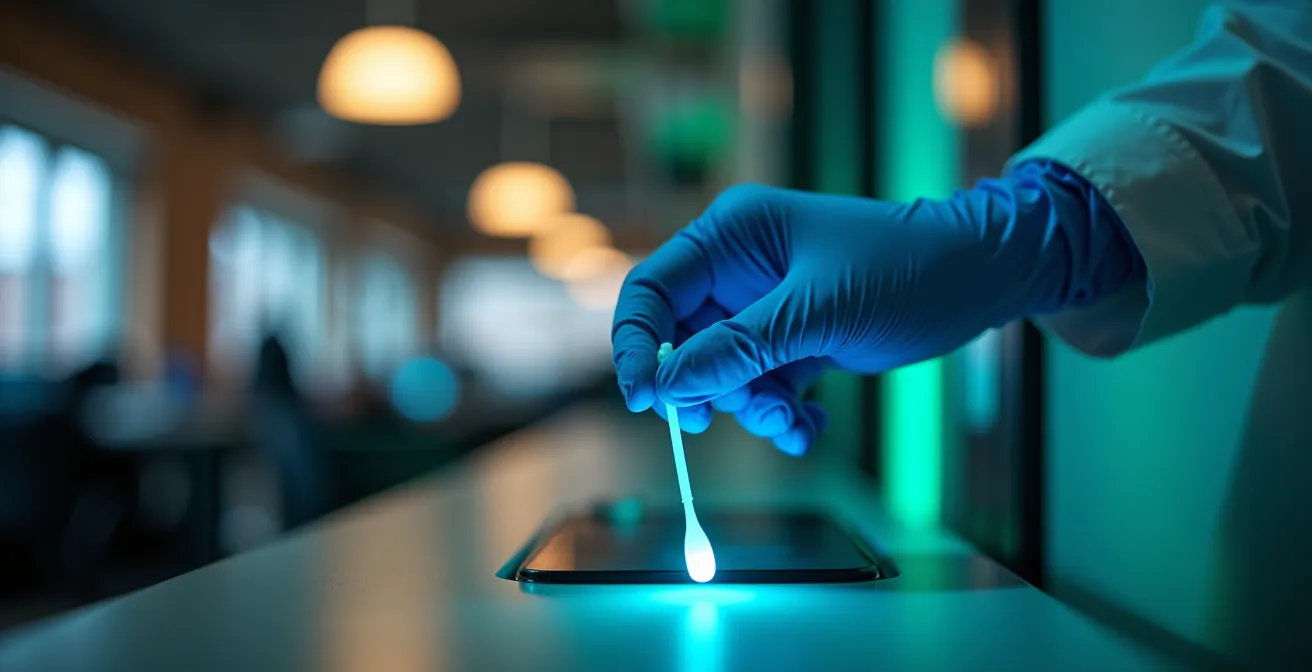
As the image illustrates, the process is precise and scientific. Using this methodology transforms your cleaning protocol from a routine task into a targeted, measurable hygiene intervention program. This data is invaluable for justifying resource allocation and demonstrating due diligence to stakeholders and regulatory bodies.
UV-C Robots vs Manual Spraying: Which Is More Cost-Effective for Large Areas?
When tasked with disinfecting large areas like conference halls or open-plan offices, two modern options stand out: automated UV-C disinfection robots and traditional manual electrostatic spraying. The choice is not just about efficacy but about the total cost of ownership, a critical metric for any business continuity planner. At first glance, the high initial investment in UV-C technology seems prohibitive, but a deeper analysis reveals a more nuanced financial picture, especially in the context of Quebec’s labour market.
Manual spraying requires trained personnel, adherence to strict WHMIS/SIMDUT protocols for chemical handling, and carries a higher risk of CNESST liability claims due to chemical exposure. The recurring cost of labour, including union wages and benefits in Quebec, is the most significant long-term expense. In contrast, a UV-C robot operates autonomously after initial setup. While the upfront cost is high— Ontario Health estimated the purchase price of a continuous UV-C robot at CA$142,325—it drastically reduces ongoing labour costs and chemical-related liability.
The following analysis, based on data from Canadian healthcare settings, provides a clear comparison of the long-term financial implications. It adapts costs to reflect a typical Quebec commercial environment, including labour and regulatory considerations.
| Cost Factor | UV-C Robot | Manual Spraying |
|---|---|---|
| Initial Investment | CA$142,325 (purchase) or CA$53,424 (lease) | CA$5,000-10,000 (equipment) |
| Annual Operating Costs | CA$60,000 (operator) + CA$11,500-13,356 (warranty/parts) | CA$120,000-180,000 (2-3 staff with Quebec union wages) |
| 5-Year Total Cost | CA$634,255 (2 units) | CA$610,000-910,000 |
| WHMIS Training Required | Minimal | Extensive, mandatory |
| CNESST Liability Risk | Low | High (chemical exposure claims) |
Over a five-year horizon, the total cost of ownership for UV-C robots can be comparable to or even lower than manual spraying, while offering greater consistency and a lower risk profile. For a BCP, the decision hinges on balancing capital expenditure with long-term operational costs and risk mitigation.
The Fogging Mistake: Why Spraying the Air Doesn’t Clean the Surfaces
In the early days of the pandemic, images of teams “fogging” or “misting” large public spaces became common. The practice seemed like a comprehensive solution, covering everything in a cloud of disinfectant. However, this method is one of the most misunderstood—and often misused—techniques in disinfection. The fundamental mistake is believing that spraying the air effectively cleans the surfaces where pathogens actually lurk.
Viruses are transmitted primarily through droplets that settle on surfaces or, less commonly, through direct inhalation of aerosols. Fogging primarily addresses airborne particles, but it does not replace the need for direct surface contact. For a disinfectant to work, it must be physically applied to a surface and remain wet for a specific duration, known as “dwell time.” Fogging often fails to achieve consistent coverage or adequate dwell time on complex, vertical, or underside surfaces. Gravity pulls the mist downwards, leaving many critical areas untouched.
More importantly, the practice carries significant health risks for staff and occupants. Widespread aerosolization of chemicals can cause respiratory irritation and other health issues. Quebec’s own public health authority, the INSPQ, explicitly advises against this method for routine disinfection. As they state in their guidelines:
If possible, one should avoid using spray bottles to limit aerosolization of disinfectants, which could be inhaled and irritate the airways and cause respiratory problems
– Institut national de santé publique du Québec (INSPQ), COVID-19: Surface Cleaning and Disinfection Guidelines
This advice, aimed at spray bottles, is even more critical for large-scale fogging. An evidence-based plan prioritizes targeted application methods like using pre-wetted wipes or direct spraying onto a cloth before wiping. This ensures proper surface contact, controls chemical exposure, and aligns with the precautionary principle championed by health authorities.
How to Maintain a Strategic Stockpile of Disinfectants Without Expiration Waste?
A key lesson from past supply chain disruptions is the need for a strategic stockpile of essential supplies. However, simply buying pallets of disinfectant is a recipe for waste. These products have a limited shelf life, and expired chemicals not only lose their efficacy but also present a disposal challenge regulated by Quebec’s MELCC (Ministère de l’Environnement, de la Lutte contre les changements climatiques, de la Faune et des Parcs). A truly resilient plan involves a tiered inventory system designed for longevity and rapid deployment.
The goal is to balance immediate readiness with long-term sustainability. This involves diversifying your inventory. Ready-to-use (RTU) products are perfect for immediate response but often have shorter shelf lives. Concentrates, on the other hand, typically have a much longer shelf life, take up less storage space, and can be diluted as needed during a sustained event. All products must have a valid Health Canada Drug Identification Number (DIN) to ensure they meet efficacy and safety standards.
Implementing a First-In-First-Out (FIFO) rotation system is crucial. As new stock arrives, it goes to the back, and older stock is moved to the front for daily use. This simple process minimizes the risk of being caught with a pallet of expired product when you need it most. For a BCP, this is about turning a static, depreciating asset into a dynamic, managed resource.
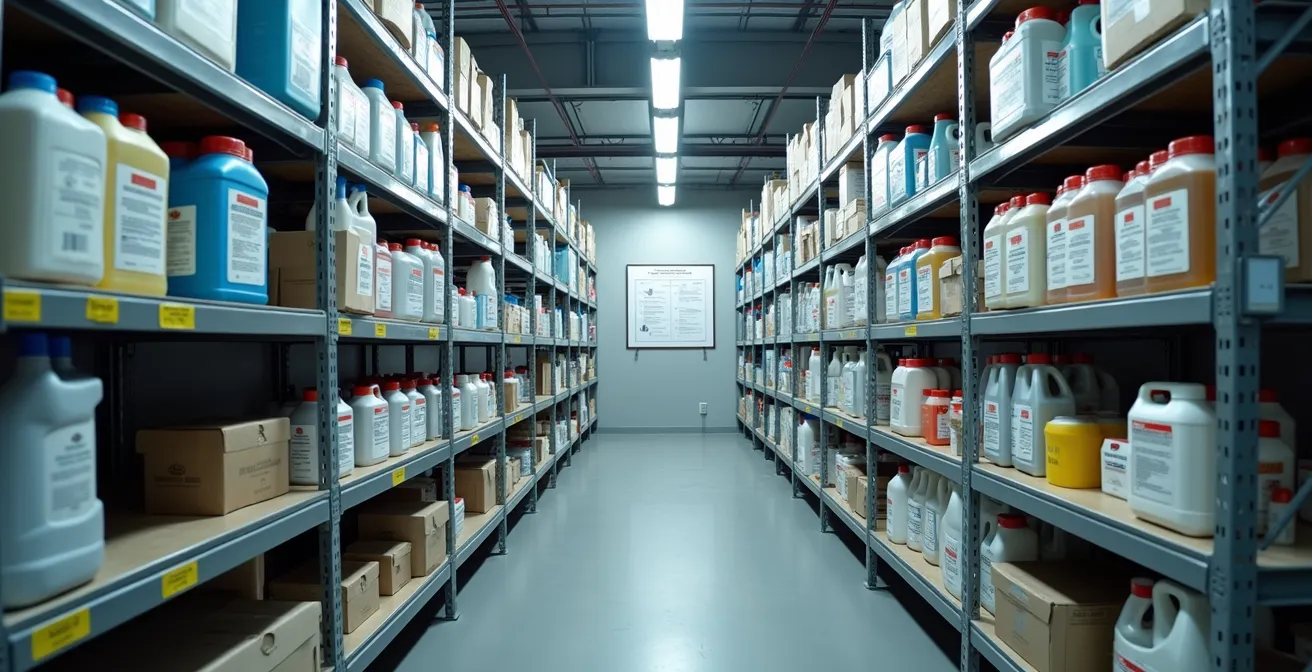
An organized storage system, as shown above, is the physical manifestation of a strategic plan. It facilitates easy inventory counts, quick access during an emergency, and safe handling of all materials.
Your Action Plan: Tiered Stockpile Strategy for Quebec Facilities
- Maintain a 30-day supply of ready-to-use products for immediate response during an “intervention trigger” event.
- Stock a 90-day supply of disinfectants in concentrate form with a longer shelf-life to reduce storage footprint and cost.
- Verify all products have a Health Canada Drug Identification Number (DIN) by checking the official online database for claims against specific pathogens.
- Establish pre-negotiated contracts or standing offers with major Canadian distributors to ensure surge capacity during a widespread crisis.
- Implement and enforce a strict first-in-first-out (FIFO) stock rotation system to minimize expiration and ensure product efficacy.
How to Disinfect Your Home Effectively After a Viral Infection Outbreak?
While this guide focuses on commercial facilities, the core principles of effective disinfection are scalable and apply directly to a residential setting. After a household member recovers from a viral illness like influenza or COVID-19, a systematic approach is needed to break the chain of transmission and protect other family members. The goal is the same: targeted, evidence-based disinfection, not indiscriminate spraying.
The first step is to differentiate between routine cleaning and post-illness disinfection. Cleaning with soap and water removes the majority of germs and should be done first. Disinfection is the second step, targeting specific areas with a product proven to kill the virus in question. Focus on the same types of “hot zones” as in an office: doorknobs, light switches, remote controls, faucets, and appliance handles. Also, pay special attention to the sick person’s bedroom and bathroom.
A critical and often overlooked aspect is safety. The surge in home disinfectant use during the pandemic led to a corresponding increase in accidents. Between March and June 2020, Canadian poison control centres saw a significant increase in calls about disinfectant exposure, with studies showing a 33% increase in calls related to these products. Always ensure proper ventilation, never mix different cleaning chemicals, and keep products out of reach of children. The case study of Quebec’s guidelines for multi-unit residential buildings during the pandemic offers a valuable lesson. Property managers were instructed to implement systematic cleaning of common areas like lobbies and elevators, proving that a structured plan is essential even in a shared living environment.
For fabrics like bedding and towels, wash them at the highest temperature setting recommended for the material. For electronics, spray a 70% alcohol solution onto a microfiber cloth (never directly onto the device) and wipe the surfaces. This methodical approach ensures safety and efficacy, turning a daunting task into a manageable process.
Why Do Viruses Spread 3x Faster in Offices with Poor Spatial Hygiene Protocols?
The statement that viruses spread faster in poorly maintained offices feels intuitive, but the underlying mechanisms are rooted in the physics and biology of transmission. Poor spatial hygiene isn’t just about visible dirt; it’s about a failure to interrupt the pathways pathogens use to travel from one person to another. This failure creates a multiplier effect, turning a single case into a departmental outbreak.
The primary reason for accelerated spread is the high density of shared surfaces and the frequency of interaction. In an office with weak protocols, contaminated surfaces are not neutralized. A virus deposited on a doorknob in the morning can be transferred to dozens of hands before noon. Each of those hands then touches other surfaces—keyboards, phones, coffee machines—creating an exponentially expanding web of contamination. Without a protocol for regular disinfection of these transmission vectors, the virus has free reign.
Furthermore, poor cleaning methods can actively worsen the situation. For instance, dry dusting or using a contaminated cloth can aerosolize viral particles, resuspending them in the air to be inhaled or to settle elsewhere. The INSPQ reinforces this, stating that “Wet cleaning methods are preferable to dry methods, as they are less likely to resuspand infectious aerosols in the air.” The parallel in healthcare is stark; in Canada, it’s estimated that HAIs result in 8,000 deaths and 220,000 infections annually, a grim reminder of how crucial protocol adherence is in high-density environments. An office is not a hospital, but it shares the same fundamental risk dynamics.
Wet cleaning methods are preferable to dry methods, as they are less likely to resuspend infectious aerosols in the air
– INSPQ, COVID-19 Surface Cleaning and Disinfection Guidelines
A strong hygiene protocol acts as a “circuit breaker.” It systematically removes pathogens from surfaces, reducing the viral load in the environment and breaking the chains of transmission. This is why offices with robust, evidence-based plans see significantly lower rates of workplace spread.
Key takeaways
- A pandemic plan must be a defensible system, not just a cleaning checklist, to satisfy Quebec’s regulatory environment (CNESST, LSST).
- Use evidence-based methods like ATP testing to identify and map high-risk “hot zones” instead of relying on assumptions.
- Your strategy must include a clear “intervention trigger” that activates heightened protocols in response to a confirmed case.
Validating Decontamination: How to Prove Your Quebec Facility Is Safe to Reopen?
After a significant exposure event or a facility-wide shutdown, simply stating that the building has been “deep cleaned” is not enough. For a BCP in Quebec, the final and most critical step is validation: proving, with objective evidence, that the decontamination was successful and the space is safe for employees to return. This isn’t just for peace of mind; it’s a legal and operational necessity to protect against liability under Quebec’s Loi sur la santé et la sécurité du travail (LSST).
Your “validation file” is your primary defence. This file should be a comprehensive record of the entire process, including the written cleaning plan, WHMIS/SIMDUT training records for all staff involved, a log of the disinfectants used (with their DINs), and detailed records of when and where cleaning occurred. This documentation demonstrates a systematic and diligent approach.
However, the cornerstone of modern validation is quantifiable data. This is where ATP testing becomes indispensable once again. After the cleaning and disinfection process is complete, a second round of ATP tests is conducted on the same hot zones identified earlier. The goal is to show a significant, measurable reduction in the ATP scores, proving that the organic load—and by extension, the potential viral risk—has been effectively eliminated. Tools that provide ATP bioluminescence testing provides contamination assessment with real-time results in 15 seconds, allowing for rapid verification and decision-making. These post-cleaning RLU (Relative Light Units) results are the ultimate proof of a successful decontamination.
This data-driven validation transforms a subjective process into an objective, defensible one. It provides the concrete evidence needed to confidently declare a facility safe, reassure employees, and satisfy any inquiries from the CNESST or other regulatory bodies. It is the final piece of a truly resilient pandemic preparedness plan.
Frequently Asked Questions on Pandemic Preparedness Cleaning Plans
What documentation is required for CNESST compliance in Quebec?
Facilities must maintain written cleaning plans, WHMIS/SIMDUT training certificates for all staff, records of disinfectant DINs used, detailed cleaning time logs, and post-cleaning ATP test results as evidence of due diligence.
How do ATP test results validate cleaning effectiveness?
ATP testing provides quantifiable RLU (Relative Light Unit) measurements that demonstrate surface cleanliness. Results below facility-established thresholds (typically 50-150 RLU for food contact surfaces) provide objective evidence of successful decontamination.
What legal protections does a validation file provide in Quebec?
A comprehensive validation file serves as critical evidence under Quebec’s Loi sur la santé et la sécurité du travail (LSST), demonstrating the employer fulfilled their obligation to protect worker health and can be essential for insurance claims or liability cases.