
The key to preventing winter water damage in Quebec isn’t just cleaning your gutters; it’s mastering your home’s entire drainage ecosystem to combat the brutal freeze-thaw cycle.
- Clogged gutters create the initial blockage, but it’s the cycle of melting and refreezing that forces water under your shingles and into your home.
- Properly managed downspouts are as critical as clean gutters to prevent foundation damage during the spring melt.
Recommendation: Schedule a thorough, professional gutter and downspout cleaning after the last leaves have fallen but before the first significant, lasting snowfall.
If you’re a Quebec homeowner, the memory of water damage is a particularly cold one. The drip you hear inside a wall during a January thaw, the tell-tale stain on a ceiling, or a flooded basement in spring are experiences that go beyond mere inconvenience; they represent significant stress and financial loss. Many believe that a simple gutter cleaning in early autumn is enough protection. They might even invest in gutter guards, thinking the problem is solved for good. This is a common and costly misunderstanding of how water behaves during our harsh winters.
The real culprit isn’t just debris; it’s the relentless freeze-thaw cycle unique to our climate. A sunny 2°C afternoon can melt a significant amount of snow on your roof. When this water runs down and hits the cold, clogged eaves, it refreezes overnight. This process repeats, building a dam of ice that grows progressively larger. Soon, meltwater has nowhere to go but backward, up under your shingles, where it can wreak havoc on your roof deck, insulation, and interior walls. A severe ice storm in Ontario and Quebec demonstrated the scale of the problem, causing $342 million in insured damage, much of it related to water infiltration.
This guide moves beyond the generic advice. We will explore the specific mechanics of ice dam formation, the proper techniques and tools for cleaning, the critical role of downspouts in spring, and the real financial implications of neglect. By understanding your roof as a complete drainage ecosystem, you can turn routine maintenance into a powerful defense against winter’s worst.
To help you protect your investment, this article breaks down the essential strategies for preventing ice dams and managing meltwater effectively. Explore the sections below to gain a comprehensive understanding of each critical component.
Summary: Preventing Ice Dams: Why Late Autumn Gutter Cleaning Is Crucial for Quebec Homes
- How Do Clogged Gutters Contribute to Ice Formation Under Shingles?
- How to Use Standoff Stabilizers to Clean Gutters Without Crushing Them?
- Gutter Guards vs Annual Cleaning: Is the Investment Worth It in Heavy Snow Zones?
- The Downspout Extension Mistake That Floods Your Foundation in Spring
- How to Collect and Compost Gutter Debris Instead of Bagging It?
- Why Scheduling Gutter Cleaning Before the Spring Thaw Is Crucial?
- The Roof Drain Oversight That Causes Thousands in Water Damage During Thaws
- Why Neglecting Exterior Maintenance Devalues Your Montreal Property by up to 15%?
How Do Clogged Gutters Contribute to Ice Formation Under Shingles?
The formation of an ice dam is a chain reaction, and clogged gutters are the first link. When gutters are filled with autumn leaves, pine needles, and other debris, they can’t perform their primary function: draining water away from the roof edge. In Quebec, this failure becomes critical during the first freeze-thaw cycles of late autumn and winter. Heat escaping from your home warms the underside of the roof, melting the bottom layer of snow. This meltwater flows down the roof until it reaches the cold eaves and the blocked gutter, where it refreezes.
This initial layer of ice acts as a dam, trapping subsequent meltwater behind it. This pooling water has nowhere to go but backward, working its way underneath the roof shingles. This is where hydrostatic pressure comes into play; the sheer weight of the trapped water forces it through the smallest gaps, compromising your roof’s water-resistant underlayment. The process is insidious, as the damage occurs out of sight.
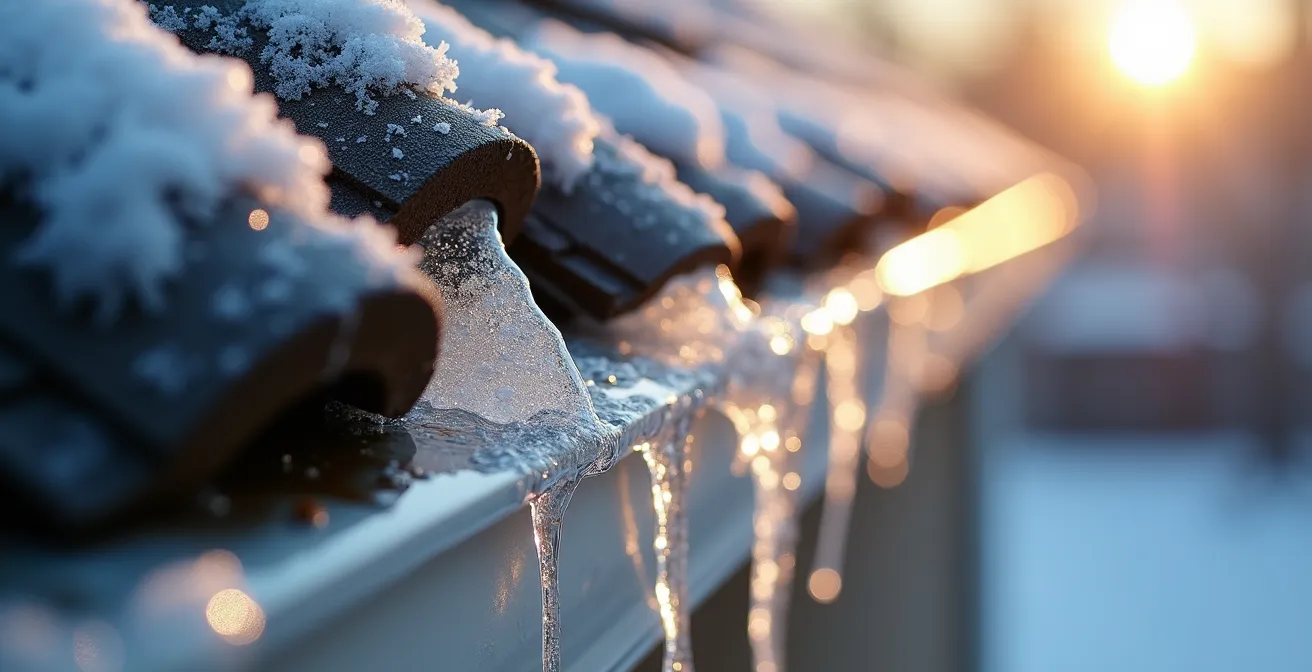
As you can see in the illustration, the ice doesn’t just sit on top; its crystalline structure actively works its way into the crevices between the shingle and the roof edge. A case study of weather events in Eastern Canada highlighted this exact problem, noting that during a February thaw, ice damming and water infiltration were the leading causes for insurance claims as water backed up and penetrated homes. An empty, clean gutter allows meltwater to drain away before it has a chance to freeze at the eave, effectively breaking the chain reaction before it begins.
How to Use Standoff Stabilizers to Clean Gutters Without Crushing Them?
Once you understand the importance of clean gutters, the next logical step is the cleaning itself. However, a common mistake homeowners and even inexperienced handymen make is leaning a ladder directly against the eavestroughs. Aluminum gutters are relatively soft and not designed to bear weight; leaning a ladder against them can easily cause dents, warping, or crushing. A damaged gutter won’t slope correctly, creating low spots where water will pool and freeze, ironically recreating the very problem you’re trying to solve.
The professional solution is to use ladder standoff stabilizers. These attachments connect to the top of an extension ladder and feature two arms with rubber or plastic feet that rest directly on the roof surface or the fascia board, completely bypassing the gutter. This provides a much more stable and safer platform to work from, as it distributes the ladder’s weight onto the structural components of the roof, not the delicate drainage system. It also holds the ladder away from the wall, giving you better access and a more comfortable angle to scoop out debris.
For professionals, this equipment is non-negotiable for both safety and effectiveness. Quebec’s own workplace safety innovators have developed advanced versions of this tool. As noted by the team behind a leading product:
Winner of the CNESST’s top prize for Innovation in 2020, this aluminum safety equipment is adjustable according to the type of roof.
– ProtecMI, Professional ladder stabilizer specifications
Using a stabilizer prevents costly damage to your gutters, ensuring they maintain their proper slope and function. It’s a prime example of how using the right tool not only makes the job safer but also protects the long-term integrity of your home’s drainage ecosystem.
Gutter Guards vs Annual Cleaning: Is the Investment Worth It in Heavy Snow Zones?
The promise of gutter guards is seductive: a one-time installation to eliminate the need for biannual cleaning. For many climates, they are an effective solution. However, in heavy snow zones like Quebec, the calculation is more complex. While guards can prevent leaves and large debris from clogging the gutter trough, they are not always effective against smaller debris like pine needles and shingle grit, which can form a sludge that blocks water flow. More importantly, some types of guards can exacerbate ice damming.
In winter, snow often covers the guards completely. During a thaw, meltwater runs over the snow and the guard, dripping off the edge and forming icicles. This can create an “ice shelf” along the eave, where the water refreezes directly on top of the guard, creating a dam that is just as damaging as one inside the gutter. In some cases, the weight of the snow and ice can also damage or dislodge the guards themselves. This doesn’t mean all guards are unsuitable, but it does mean that professional annual inspection is still necessary, which adds to the long-term cost.
Let’s look at a cost-benefit analysis over a 10-year period for a typical Quebec home, which also considers a third option: heated cables.
| Solution | Initial Cost | Annual Maintenance | 10-Year Total | Ice Dam Risk |
|---|---|---|---|---|
| Professional Gutter Guards | $1,500-$2,500 | $100 inspection | $2,500-$3,500 | Medium (can create ice shelf) |
| Annual Professional Cleaning | $0 | $300 (2x yearly) | $3,000 | Low (if maintained) |
| DIY Cleaning | $200 (equipment) | Time + risk | $200 + injury risk | Variable |
| Heated Cable System | $600-$900 | $50 electricity | $1,100-$1,400 | Very Low |
This comparative analysis shows that while gutter guards have the highest upfront cost, their 10-year total is comparable to consistent professional cleaning. However, the key differentiator is the “Ice Dam Risk.” For a homeowner who has already experienced water damage, minimizing risk is the top priority, making annual professional cleaning or a heated cable system a more reliable choice. With over 187 gutter cleaning services in Quebec, finding a qualified professional is a straightforward process.
The Downspout Extension Mistake That Floods Your Foundation in Spring
A pristine, ice-free gutter system is only half the battle. The entire purpose of this system is to move water from the roof to a safe distance away from your foundation. This is where the downspout and its extension become the most critical—and often most mishandled—component, especially during the spring thaw. The most common mistake is having an extension that is too short, improperly sloped, or disconnected, which deposits massive volumes of meltwater directly against the foundation wall.
In early spring, while the air temperature is above freezing, the ground just a few inches below the surface is often still frozen solid. This frozen soil is non-porous, meaning it cannot absorb the sudden deluge of water from melting roof snow. If your downspout deposits this water next to the house, it will pool against the foundation. This creates immense hydrostatic pressure that can force water through cracks in the concrete, leading to a wet or flooded basement. The evidence from Quebec’s intense thaws is clear: basement infiltration from meltwater is a primary source of insurance claims when the snowpack melts rapidly over frozen ground.
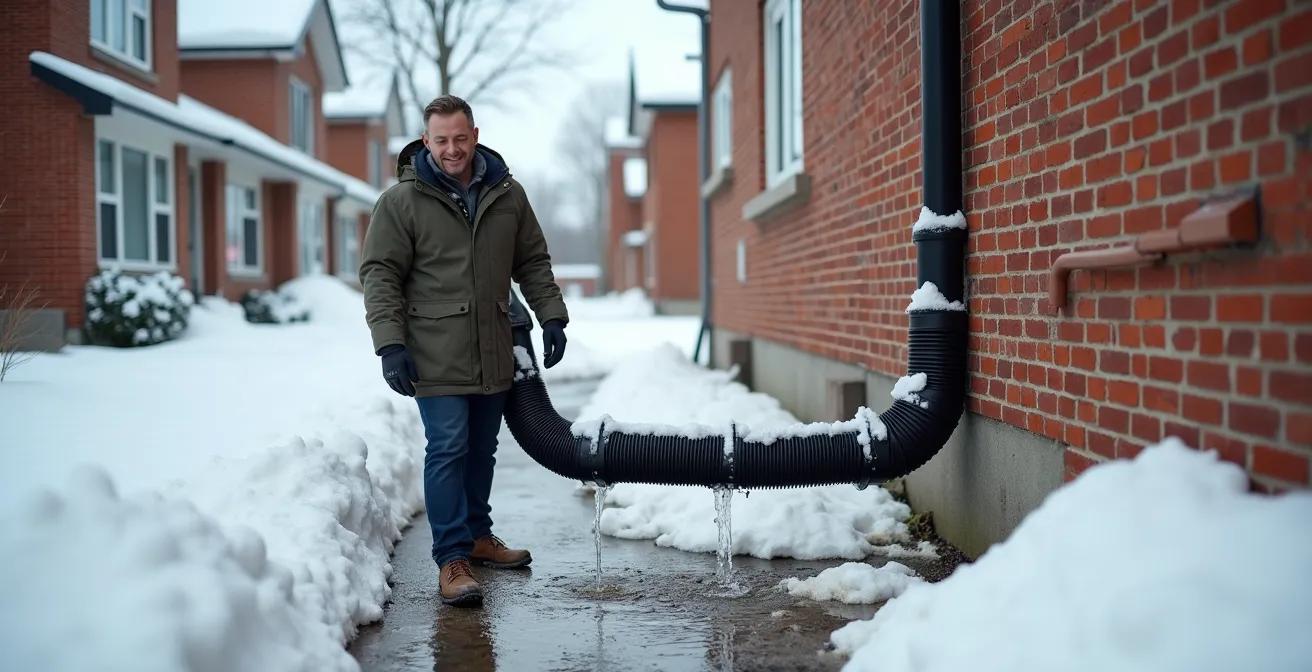
The solution is a properly installed and maintained downspout extension that directs water at least six feet away from the foundation, onto ground that is graded to slope away from the house. In a climate with deep freezes, using detachable or flexible extensions that won’t crack in the cold is a smart strategy. Managing your downspouts is a critical part of a holistic approach to water management.
Action Plan: Spring Downspout Management
- Install detachable extensions that can be removed before a deep freeze to prevent ice blockage inside the downspout.
- Ensure extensions direct water at least 6 feet (1.8 metres) away from the foundation.
- Clear any ice buildup from the downspout opening using warm water (never hot, which can crack frozen PVC or vinyl).
- Check that the ground around your foundation has a proper slope (at least a 2% grade) to carry water away.
- After each major thaw, inspect the foundation walls in your basement for any signs of moisture or efflorescence (white, powdery deposits).
How to Collect and Compost Gutter Debris Instead of Bagging It?
After a thorough gutter cleaning, you’re left with a pile of wet leaves, pine needles, twigs, and shingle grit. The default for many is to bag this material and send it to a landfill. However, this organic debris is a valuable resource for any Quebec homeowner with a garden or compost bin. Instead of treating it as waste, you can easily turn it into nutrient-rich compost, reducing your environmental footprint and improving your soil health.
Most of the material from your gutters is “brown” or carbon-rich matter, which is a perfect balancing ingredient for “green” nitrogen-rich materials like kitchen scraps and grass clippings in a compost pile. The key is to manage the specific properties of the debris. For instance, pine and spruce needles are highly acidic and break down slowly. They should be mixed with materials that can neutralize this acidity, like a small amount of wood ash or crushed eggshells, to create a balanced compost.
For those using municipal composting services, like Montreal’s brown bin program, gutter debris is generally accepted. However, it’s wise to mix highly acidic material like pine needles with other leaves to avoid creating an overly acidic batch. Here is a breakdown of how common tree debris from Quebec properties behaves in a compost pile.
| Tree Type | Decomposition Time | pH Level | Best Mixed With |
|---|---|---|---|
| Maple Leaves | 6-12 months | Neutral (6.5-7) | Kitchen scraps |
| Pine Needles | 18-24 months | Acidic (3.5-4) | Lime or wood ash |
| Oak Leaves | 12-18 months | Slightly acidic (5.5) | Grass clippings |
| Spruce Needles | 24-36 months | Very acidic (3.2) | Crushed eggshells |
By composting your gutter debris, you complete a natural cycle. The leaves that once drew nutrients from the soil are returned to it, enriching your garden for the next season. It’s a simple, sustainable practice that turns a maintenance chore into a productive and environmentally friendly activity.
Why Scheduling Gutter Cleaning Before the Spring Thaw Is Crucial?
While a late-autumn cleaning is the primary defense against ice dams, a late-winter or early-spring inspection and cleaning can be just as crucial, especially after a particularly harsh winter. Over the winter months, high winds can deposit more debris into your gutters, and heavy snow and ice can cause blockages in downspouts that weren’t present in the fall. If your gutters are clogged when the major spring thaw begins, you face a different but equally damaging problem: overwhelming water volume.
As we’ve seen, the frozen ground in early spring can’t absorb water. When a large snowpack on your roof melts over a few days, it releases an immense volume of water. If the gutters and downspouts are blocked, this water will spill over the sides, sheeting down your home’s exterior walls and pooling directly against your foundation. This is a recipe for foundation saturation and basement flooding. The Insurance Bureau of Canada has repeatedly identified the spring thaw as a period of high risk, stating clearly in a recent report that “Ice damming and water infiltration/basement leakage were the leading causes for claims.”
Scheduling a check-up before the first major thaw is a proactive measure. A professional can quickly clear any newly accumulated debris and, most importantly, ensure that downspouts are clear of ice plugs. They can safely clear these blockages with warm water or steam, ensuring that when the melt begins, your entire drainage ecosystem is ready to handle the flow. This second visit is a small investment compared to the cost and headache of dealing with a flooded basement or water damage to your siding and foundation.
The Roof Drain Oversight That Causes Thousands in Water Damage During Thaws
While sloped roofs with gutters are common, many homes in Quebec, particularly Montreal’s iconic plexes and row houses, feature flat or low-slope roofs. These properties don’t use gutters but rely on a system of internal roof drains. For these homeowners, the principles of the freeze-thaw cycle are the same, but the point of failure is different and often overlooked. A clogged or frozen roof drain can cause catastrophic damage in a very short amount of time.
On a flat roof, all water is directed toward one or more drains. If the strainer covering a drain becomes clogged with leaves, plastic bags, or other debris, water will begin to pool. This is known as “ponding.” In the winter, this ponded water can freeze, completely sealing the drain. During a thaw, meltwater from the entire roof area accumulates rapidly with nowhere to go. The weight of this water can become immense, potentially exceeding the structural load capacity of the roof and leading to sagging or, in extreme cases, collapse. This risk is growing; since 2019, Canada has experienced a 485% increase in insured losses from severe weather, with water damage being a primary driver.
Even without a collapse, the ponding water will find the path of least resistance, which is often through flashing, seams in the roofing membrane, or around vents, leading to severe interior leaks. Regular inspection of roof drains is therefore not optional; it’s essential maintenance. Here are the key steps for inspecting a flat roof drain system:
- Twice-Yearly Inspection: Check drains in late fall and early spring.
- Clear Strainers: Remove all debris from the drain cover and the area around it.
- Check for Ponding: Look for signs of standing water, which indicate poor slope or a partial blockage.
- Test Flow: In warmer weather, run a hose to ensure water drains quickly and doesn’t back up.
- Inspect Overflow Scuppers: Ensure emergency overflow drains on the side of the parapet wall are clear and functional.
Key Takeaways
- Preventing ice dams in Quebec is about managing the freeze-thaw cycle, not just cleaning debris.
- A complete drainage ecosystem includes clean gutters, functional downspouts, and proper grading away from the foundation.
- The financial cost of neglect, from emergency repairs to decreased property value, far outweighs the cost of professional annual maintenance.
Why Neglecting Exterior Maintenance Devalues Your Montreal Property by up to 15%?
Preventative maintenance is more than just avoiding the immediate cost of a repair; it’s a direct investment in your property’s long-term value. In a competitive real estate market like Montreal’s, curb appeal and the visible state of a home’s exterior are powerful factors. However, the impact of neglect goes far deeper than aesthetics. Evidence of water mismanagement is a major red flag for potential buyers and home inspectors, and it can significantly devalue your property.
Stains on the soffits, peeling paint below the eaves, or efflorescence on the foundation are all tell-tale signs of chronic gutter overflow or ice damming. These visual cues signal to a prospective buyer that there could be hidden, more expensive problems like wood rot, mold in the attic, or structural foundation issues. The cost to remedy these problems is often unknown, and buyers will factor a worst-case scenario into their offer, potentially reducing it by up to 15% or more. With insured damage from severe weather reaching an all-time high of $8.5 billion in 2024, buyers and their insurers are more cautious than ever.
Furthermore, insurance companies are taking note of long-term neglect. An expert testimony on the subject highlights the financial risk:
Standard homeowners’ insurance policies commonly cover sudden and accidental water damage caused by ice dams. However, ongoing or repeated damage is considered a long-term maintenance issue and may not be covered under a home insurance policy. This can significantly impact property resale value as buyers factor in potential repair costs and insurance complications.
– Insurance Bureau of Canada, Stay Protected: Understanding and Helping Prevent Ice Dams
A history of water-related claims or visible signs of neglect can make a property difficult or more expensive to insure for the next owner. Investing a few hundred dollars each year in professional exterior maintenance not only prevents thousands in potential damages but also protects your home’s position as your most valuable asset.
Ultimately, safeguarding your Quebec home from water damage is an ongoing strategy, not a one-time fix. By understanding the forces at play and taking proactive, informed steps, you can protect your property’s value and enjoy peace of mind through even the harshest winters. For a comprehensive assessment and professional maintenance of your home’s drainage system, consulting with a qualified local expert is the logical next step.
Frequently Asked Questions About Gutter Maintenance in Quebec
Can pine needles from gutters go in Montreal’s brown bin?
Yes, but mix them with other organic matter as they’re highly acidic. Balance with maple leaves for optimal decomposition.
What’s the maximum volume accepted per collection?
Most Quebec municipalities accept up to 10 bags of yard waste including gutter debris during peak collection periods.
How to prevent the brown bin from freezing shut in winter?
Line the bottom with newspaper, avoid putting wet debris directly against the lid, and apply vegetable oil to the rim before freezing temperatures.