
A documented exterior maintenance plan is not merely a cost, but a financial instrument that can prevent a valuation loss of up to 15% on your Montreal property.
- It actively mitigates structural damage from Quebec’s harsh freeze-thaw cycles and corrosive de-icing salts.
- It ensures compliance with mandatory regulations like Bill 122, transforming a legal obligation into a verifiable asset.
- It provides tangible proof of diligent management that justifies a higher valuation to appraisers and potential buyers.
Recommendation: Implement a 4-season preventive maintenance calendar tailored specifically to Montreal’s unique climate challenges to protect and enhance your asset’s long-term value.
As a property investor or condo syndicate member in Montreal, you track market fluctuations, rental yields, and capital appreciation with precision. Yet, one of the most significant threats to your asset’s value isn’t in the stock market; it’s clinging to the exterior of your building. The slow, creeping decay caused by neglected maintenance can silently erode up to 15% of your property’s market price upon appraisal or sale. This isn’t just about a bit of dirt or peeling paint; it’s about the structural integrity and perceived risk associated with your investment.
Many property managers believe that a pressure wash before a sale or a quick gutter clean-up in the fall is sufficient. They might address visible cracks as they appear and assume compliance with basic safety codes covers their bases. This reactive approach, however, is a financial miscalculation. It ignores the unique and aggressive environmental factors of the Quebec climate, from acid rain in downtown cores to the relentless freeze-thaw cycles that pulverize concrete and masonry from the inside out.
But what if the true key to preserving value wasn’t just reacting to damage, but proactively documenting a defense against it? The real strategy lies in reframing exterior maintenance from an expense to a crucial form of risk mitigation. A well-maintained building log, detailing season-specific preventive actions, becomes a financial instrument—a tangible asset that proves diligent stewardship to an appraiser. It demonstrates that the property is not a ticking time bomb of deferred costs but a responsibly managed investment.
This guide will walk you through the specific Montreal-centric risks that devalue your property and provide a strategic framework for creating a 4-season maintenance plan that acts as a shield for your investment. We will analyze the real ROI of proactive care and provide a calendar of critical tasks timed to the Quebec climate, transforming your maintenance schedule into a value-add proposition.
This article details the critical maintenance tasks required for each of Montreal’s distinct seasons. The following summary provides a comprehensive overview of how to structure your annual maintenance strategy to maximize your property’s value and longevity.
Summary: A Strategic Approach to Montreal Exterior Maintenance
- Why Does Urban Pollution Degrade Brick Mortar Faster in Downtown Areas?
- How to Create a 12-Month Preventive Maintenance Calendar for Commercial Properties?
- Proactive Cleaning vs Reactive Repairs: Analyzing the ROI for Building Envelopes
- The Roof Drain Oversight That Causes Thousands in Water Damage During Thaws
- How to Extend the Lifespan of Exterior Awnings Through Seasonal Cleaning?
- Why Does High PSI Water Injection Cause Mold Growth Behind Siding?
- Why Does Salt Crystallization Cause Concrete Surfaces to Pop and Flake?
- The 4-Season Cleaning Calendar: When to Schedule Major Tasks in the Quebec Climate?
Why Does Urban Pollution Degrade Brick Mortar Faster in Downtown Areas?
In dense urban environments like downtown Montreal, the building envelope is under constant assault from more than just weather. Airborne pollutants, primarily sulfur and nitrogen oxides from vehicle exhaust, mix with precipitation to create a diluted form of acid rain. This acidic moisture settles on brick facades and, over time, chemically attacks the lime-based components in mortar. This process, known as sulfation, converts calcium carbonate in the mortar into calcium sulfate (gypsum). Gypsum is water-soluble and much weaker, causing the mortar joints to soften, crumble, and erode.
This degradation is not merely cosmetic; it is the primary entry point for water infiltration. Once the mortar joints are compromised, water penetrates the wall assembly, leading to interior damage, mold growth, and, most critically in our climate, catastrophic freeze-thaw damage. For a property investor, a building with visibly crumbling mortar is a major red flag, signaling deferred maintenance and potential hidden structural issues. An appraiser will immediately factor in the high cost of repointing an entire facade, directly lowering the building’s valuation.
In Quebec, this issue is so critical that it’s addressed by law. The Régie du bâtiment du Québec (RBQ), through Bill 122, mandates periodic facade inspections for buildings of five storeys or more. This isn’t just a bureaucratic hurdle; it’s a framework for preserving asset value. Proactively managing your facade’s health and keeping a detailed maintenance log proves you are mitigating this risk long before it becomes a dangerous and costly condition. It transforms a legal requirement into a documented asset.
Your Action Plan: Complying with Facade Inspection Requirements (Bill 122)
- Schedule a mandatory facade inspection every 5 years for buildings of 5 storeys and higher.
- Engage an engineer or architect certified by their respective Quebec professional order (OIQ or OAQ) to conduct the thorough inspection.
- Address any identified dangerous conditions immediately with required emergency measures to ensure public safety.
- Submit a detailed corrective work plan to the RBQ within 30 days if significant issues are found during the inspection.
- Maintain a comprehensive building maintenance register throughout the building’s life, documenting all inspections and repairs.
How to Create a 12-Month Preventive Maintenance Calendar for Commercial Properties?
A preventive maintenance calendar is the strategic tool that translates good intentions into concrete actions and, ultimately, financial returns. For a Montreal property, a generic checklist is useless. The calendar must be built around the four distinct and aggressive seasons of Quebec. It’s about scheduling the right task at the right time to counter a specific seasonal threat, thereby preventing damage rather than just reacting to it. This proactive scheduling is what appraisers and savvy buyers look for as evidence of professional management.
The core principle is to prepare for the coming season while cleaning up from the last. For example, autumn isn’t just about leaf removal; it’s about preparing the building envelope for freezing temperatures and heavy snow loads. Spring isn’t just about a fresh look; it’s about inspecting for and repairing the damage inflicted by winter’s freeze-thaw cycles. Each action should be logged in your building maintenance register, creating a verifiable history of responsible stewardship that directly supports your property’s valuation.
This calendar should be a living document, detailing tasks on a monthly and quarterly basis. It allocates budget and resources logically throughout the year, avoiding the financial shock of unexpected, large-scale repairs. It also allows you to book qualified professionals well in advance, avoiding the rush and potential scheduling conflicts, such as planning major work around the province-wide construction holiday.

As visualized, each season presents unique challenges that require specific interventions. Autumn focuses on clearing debris from drainage systems before the first frost. Winter is about managing ice and snow to prevent structural overload and ice dams. Spring is dedicated to inspection and repair of any winter damage, particularly to foundations and masonry. Summer is the ideal time for larger projects like painting, sealing, and facade cleaning, taking advantage of the favorable weather.
Proactive Cleaning vs Reactive Repairs: Analyzing the ROI for Building Envelopes
For an investor, every dollar spent must have a justifiable return. The debate between proactive maintenance and reactive repair is not about aesthetics; it’s a fundamental financial calculation. Reactive repairs—fixing a leak, repointing a crumbled wall, replacing a rotted window frame—are always more expensive than the preventive measures that could have avoided them. They often involve emergency call-out fees, cause greater secondary damage, and occur at unpredictable times, wrecking budgets. More importantly, they signal poor management to a potential buyer.
Proactive cleaning and maintenance, on the other hand, represent a controlled, budgeted investment in asset preservation. For example, the cost of an annual soft-wash to remove corrosive pollutants and organic growth from a facade is minimal compared to the cost of a full masonry repointing project required after years of neglect. A small investment in regular gutter cleaning prevents the formation of ice dams, which can cause tens of thousands of dollars in water damage to the roof, structure, and interior finishes.
Case Study: Cost-Benefit of Preventive Maintenance under Bill 122
A Montreal building owner, guided by the requirements of Bill 122, implemented a structured preventive maintenance program following a facade inspection. Instead of facing a massive, one-time bill for all corrective work, the owner was able to create a multi-year action plan. This approach allowed them to spread the costs of minor repointing, sealant replacement, and cleaning over several budget cycles. This not only avoided a huge upfront capital expenditure but also prevented these minor issues from escalating into major structural failures, saving an estimated tens of thousands in future emergency repair costs and demonstrating diligent management to the RBQ and future investors.
Furthermore, timing is a critical factor in the ROI equation. Scheduling major work in Quebec requires navigating logistical hurdles like the annual construction holiday. According to industry observations, the Quebec construction holiday period of 2-3 weeks annually significantly reduces the availability of skilled technicians. Planning your maintenance outside this late-July window ensures access to better crews and more competitive pricing, directly improving your return on investment.
The Roof Drain Oversight That Causes Thousands in Water Damage During Thaws
In Montreal, the most dangerous time for a commercial roof is not the dead of winter, but the thaw. A single blocked roof drain or gutter can be the catalyst for catastrophic water damage. During the fall, leaves and debris accumulate in drainage systems. If not cleared, this material freezes into a solid plug with the first snowfall. When a mid-winter thaw or the great spring melt arrives, the melting snow and ice have nowhere to go. Water pools on the roof, exceeding the load capacity of the structure and exploiting any tiny flaw in the roofing membrane to infiltrate the building.
This leads to the dreaded ice dam, where water refreezes at the edge of the roof, backing up even further under shingles and roofing materials. The resulting interior leaks can destroy insulation, compromise electrical systems, create widespread mold, and cause structural rot. The cost of these repairs is never minor, often running into thousands or tens of thousands of dollars—a direct hit to your net operating income and a massive red flag on a building’s condition report.
This entire scenario is 100% preventable with a simple, timed maintenance task. As local experts advise, a disciplined, bi-annual approach is essential for risk mitigation. This sentiment is echoed by seasoned professionals in the field.
We recommend cleaning at least twice a year in Montreal: in spring after the snow melts to remove winter debris, and in autumn before the first frost to remove dead leaves.
– Nettoyage Danfour, Montreal Eavestrough Maintenance Guide
This small, predictable expense on your operating budget is an insurance policy against a massive, unpredictable capital expense. Checking that drains are clear in late November and ensuring heat-tracing cables are functional are some of the highest-ROI actions a property manager can take. Documenting these checks provides concrete proof that you are actively managing one of the biggest property risks in a northern climate.
How to Extend the Lifespan of Exterior Awnings Through Seasonal Cleaning?
While not a structural component, exterior awnings are a highly visible element of a commercial property’s facade and a surprising factor in its perceived value. For retail or office spaces, they contribute to curb appeal and branding. Neglected awnings—stained with pollution, covered in green algae, or torn—project an image of poor management and can deter potential tenants or customers. From an appraiser’s perspective, they represent a deferred cost that will need to be addressed by a new owner.
The primary enemies of awnings in Montreal are airborne pollutants, bird droppings, and organic growth like mold and mildew, which are fueled by humidity. These elements don’t just stain the fabric; they actively degrade it. The acidic nature of pollutants weakens fibers, while mildew can cause permanent discoloration and rot. The weight of accumulated wet leaves or snow can also stress the frame and fabric, leading to tears and mechanical failure. Regular cleaning is not an aesthetic choice; it is essential maintenance to maximize the asset’s lifespan.
A seasonal cleaning schedule can double or even triple the life of an awning, pushing a major capital replacement far into the future. A gentle wash in the spring removes the grime and salt residue from winter, while an autumn cleaning removes organic debris before it can decompose on the surface. This simple, low-cost service protects a much larger investment. For perspective, the typical cost for regular commercial storefront maintenance in Montreal can range from $26-54/month, a trivial sum compared to the thousands of dollars required to replace a large custom awning.
Maintaining these elements shows a detailed level of care for the property. When an investor sees that even the secondary components like awnings are well-maintained and documented in a log, it builds confidence in the overall management and condition of the entire asset, supporting a premium valuation.
Why Does High PSI Water Injection Cause Mold Growth Behind Siding?
In an attempt to quickly clean a building’s exterior, many property owners or inexperienced contractors turn to high-pressure washing. While effective at stripping dirt, this method is one of the most common causes of severe, hidden water damage, particularly on buildings with vinyl or aluminum siding. The immense force of the water jet is far greater than any wind-driven rain the building was designed to repel. It easily drives water past flashing, behind siding panels, and through microscopic gaps around windows and vents.
This injected water becomes trapped within the wall cavity, soaking insulation and saturating the wood sheathing. Unlike a roof leak that might create an obvious ceiling stain, this moisture is hidden from view. It creates the perfect dark, damp environment for mold and rot to flourish. By the time the problem is discovered—often through a musty smell or during a renovation—the structural damage can be extensive, requiring costly remediation and replacement of sheathing and studs.
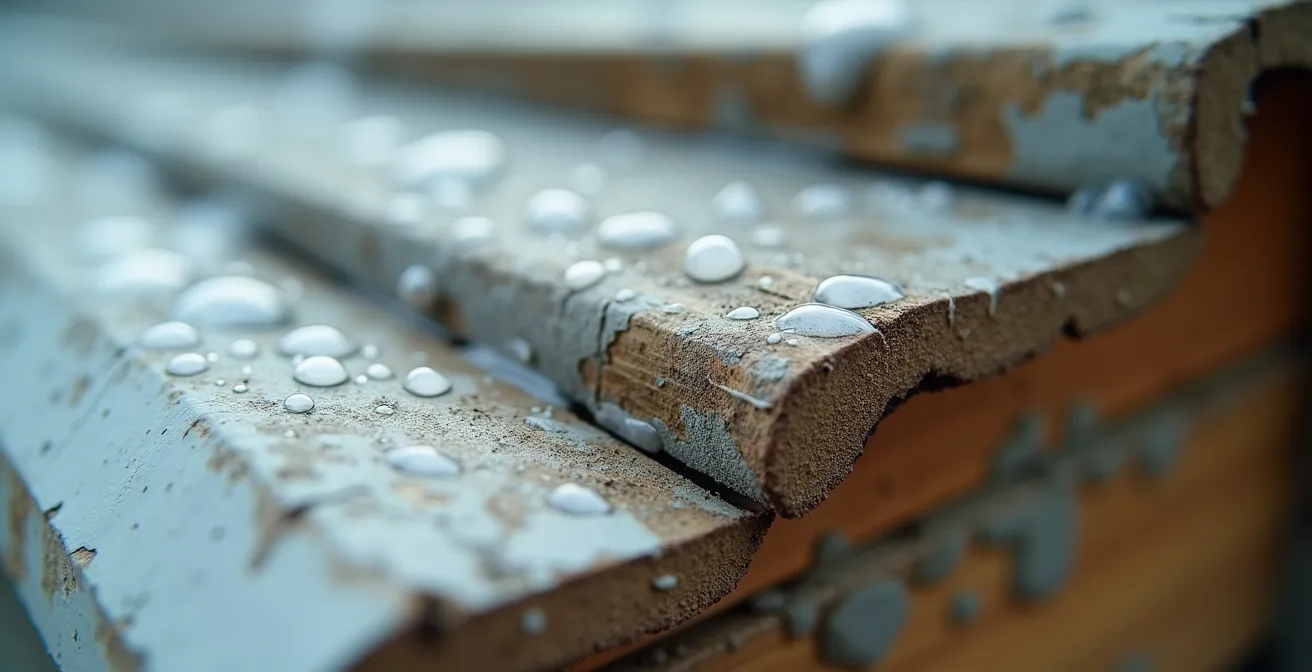
For a property appraiser or home inspector, any sign of high-pressure washing damage, such as “wand marks” or water ingress detected with a moisture meter, is a major defect. It indicates improper maintenance that has actively harmed the building. The solution is to insist on a different, more professional technique. As leading local companies emphasize, the right method protects the property.
Low-pressure soft-wash for vinyl, painted siding, stucco & roofs — no damage, no streaks.
– Montreal Prestige Wash, Professional Pressure Washing Services Montreal
Soft washing uses specialized, biodegradable cleaning solutions to kill organic growth and break down grime, followed by a low-pressure rinse that is as gentle as a garden hose. It cleans effectively without forcing water into the building envelope. Insisting on—and documenting—the use of soft washing is a key detail that demonstrates an expert approach to maintenance and a commitment to preserving the building’s structural integrity.
Why Does Salt Crystallization Cause Concrete Surfaces to Pop and Flake?
Montreal’s heavy reliance on de-icing salts during its long winters is a necessary evil for public safety, but it is a relentless destroyer of concrete surfaces. Sidewalks, parking garages, and ground-floor facades are constantly exposed to salt-laden slush and spray. This salt doesn’t just sit on the surface; it dissolves in water and is absorbed into the microscopic pores of the concrete. This is where the real damage begins, through a process called subflorescence.
As the water inside the concrete evaporates, the salt re-crystallizes and expands. This internal expansion exerts immense pressure on the surrounding concrete, causing it to pop, flake, and spall from the inside out. This is greatly accelerated by Quebec’s frequent freeze-thaw cycles, where the expansion of freezing water adds to the internal pressure. The result is a pockmarked, crumbling surface that is not only unsightly but also represents a structural weakening of the material and a potential tripping hazard.
An appraiser will immediately identify this type of damage (spalling) as a significant liability. It indicates that the concrete is unprotected and actively deteriorating, suggesting future costs for extensive and expensive repairs. As the City of Montreal’s own guidelines state, this is a core maintenance concern, as exposure to humidity and contaminants accelerates structural degradation. Fortunately, this damage is largely preventable with the correct protective treatments.
Case Study: The Science of Spalling in Freeze-Thaw Cycles
The City of Montreal’s building maintenance guidelines emphasize that no matter the material, exposure to humidity can accelerate structural degradation. Specifically for concrete, they explain that salt crystallization forming inside the material’s pores during Quebec’s numerous freeze-thaw cycles is a primary cause of surface spalling. This official recognition underscores the importance of preventive measures. As noted in the City of Montreal’s maintenance regulations, proactive sealing treatments are essential to block the absorption of chloride-based de-icers and preserve the long-term integrity of concrete structures.
Applying a high-quality, penetrating silane/siloxane sealant in the fall creates a hydrophobic barrier. It lines the pores of the concrete, preventing salt-contaminated water from soaking in, while still allowing the concrete to “breathe.” This single, proactive measure, reapplied every 3-5 years, can halt the destructive cycle of salt crystallization and preserve the integrity and appearance of your concrete assets, directly protecting their value.
Key Takeaways
- A documented maintenance plan is a financial asset that can prevent a valuation loss of up to 15%.
- Maintenance must be tailored to Montreal’s specific climate risks, especially the freeze-thaw cycle and de-icing salt use.
- Compliance with Quebec’s Bill 122 is not just a legal duty but an opportunity to prove diligent property management and add value.
The 4-Season Cleaning Calendar: When to Schedule Major Tasks in the Quebec Climate?
Synthesizing all these elements, the ultimate tool for protecting your property’s value is a holistic, 4-season maintenance calendar. This schedule operationalizes your strategy, ensuring critical tasks are performed at the optimal time to be effective. It is the definitive proof of proactive management that justifies a premium valuation. This schedule must be specific to the Quebec climate, anticipating its unique challenges rather than just reacting to them. A well-structured calendar will also account for the mandatory facade inspection frequency of every 5 years for applicable buildings, integrating this major review into the long-term plan.
Autumn (September – November): The Preparation Phase. The primary goal is to prepare the building for winter. This is the most critical period for preventing costly water damage.
- Gutter & Roof Drain Cleaning: Essential to do this after the majority of maple leaves have fallen but before the first deep freeze. This prevents ice dams.
- Concrete Sealing: Apply penetrating sealants to sidewalks and garage entrances to protect against de-icing salts. This must be done when temperatures are consistently above 5°C.
- Irrigation System Winterization: Drain all exterior pipes to prevent them from bursting when they freeze.
Winter (December – March): The Management Phase. The focus here is on managing snow and ice to prevent structural overload and safety hazards.
- Snow Removal: Ensure contracts are in place for timely removal from roofs (especially flat roofs), entrances, and walkways.
- Ice Management: Regularly check for ice buildup at drain outlets and for the formation of ice dams at roof edges.
- Mid-Thaw Inspections: During any brief warming periods, visually inspect for drainage issues and leaks.
Spring (April – June): The Inspection and Repair Phase. As the “Great Thaw” reveals the damage of winter, this is the time for a thorough building-wide inspection.
- Facade & Foundation Inspection: Check for new cracks in masonry and concrete caused by frost heave.
- Roof Inspection: Inspect the roofing membrane, flashing, and seals for damage from ice and snow.
- Window & Awning Cleaning: Wash away the winter layer of salt and grime.
Summer (July – August): The Project Phase. With stable, warm weather, summer is the ideal time for larger maintenance projects.
- Facade Cleaning (Soft Wash): Deep clean the building envelope to remove pollutants and organic growth.
- Painting & Sealing: This is the best time for exterior painting and reapplying sealants to wood and other surfaces.
- Major Repairs: Schedule any significant masonry (repointing) or structural work identified during the spring inspection, carefully planning around the construction holiday.
By implementing and documenting this 4-season calendar, you are no longer simply maintaining a property; you are actively managing a high-value asset, protecting it from depreciation, and building a compelling case for its maximum worth.
Frequently Asked Questions on Why Neglecting Exterior Maintenance Devalues Your Montreal Property by up to 15%?
When should I clean gutters to prevent ice dams?
You should clean your gutters in November, after the majority of maple leaves have fallen but critically before the first deep freeze. This single action is the most effective way to prevent ice dams, which can lead to over $10,000 in repairs from water infiltration.
What’s the best time for facade cleaning to avoid Quebec’s construction holiday?
Schedule major facade work for June or early July, or wait until mid-August. You must plan outside the mandatory two-week construction holiday period (typically the last two weeks of July) to ensure the availability of qualified technicians and to secure more competitive pricing.
When should I inspect for frost heave damage?
April, during the period often called ‘The Great Thaw,’ is the ideal time for a detailed foundation inspection. As the ground unfreezes, you can more easily spot cracks in the foundation, heaved or lifted paving stones, and other signs of damage caused by the expansion of frozen soil during the winter.